
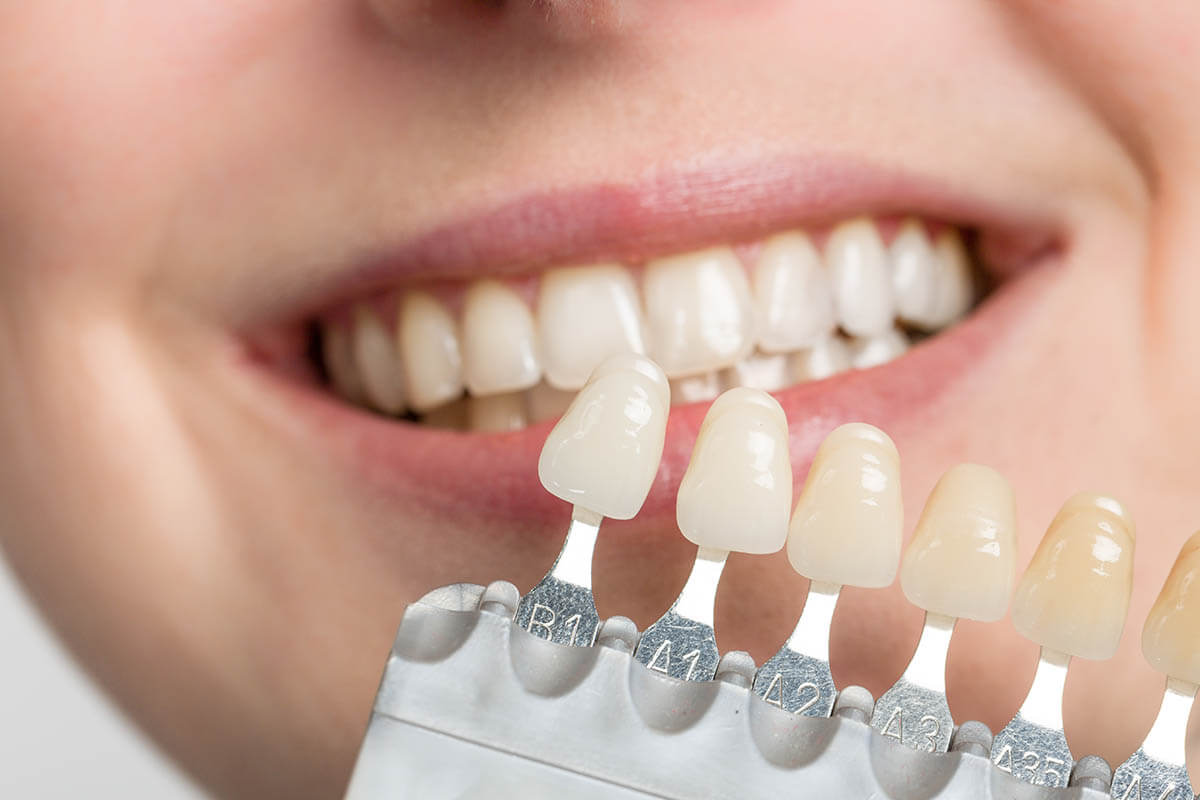
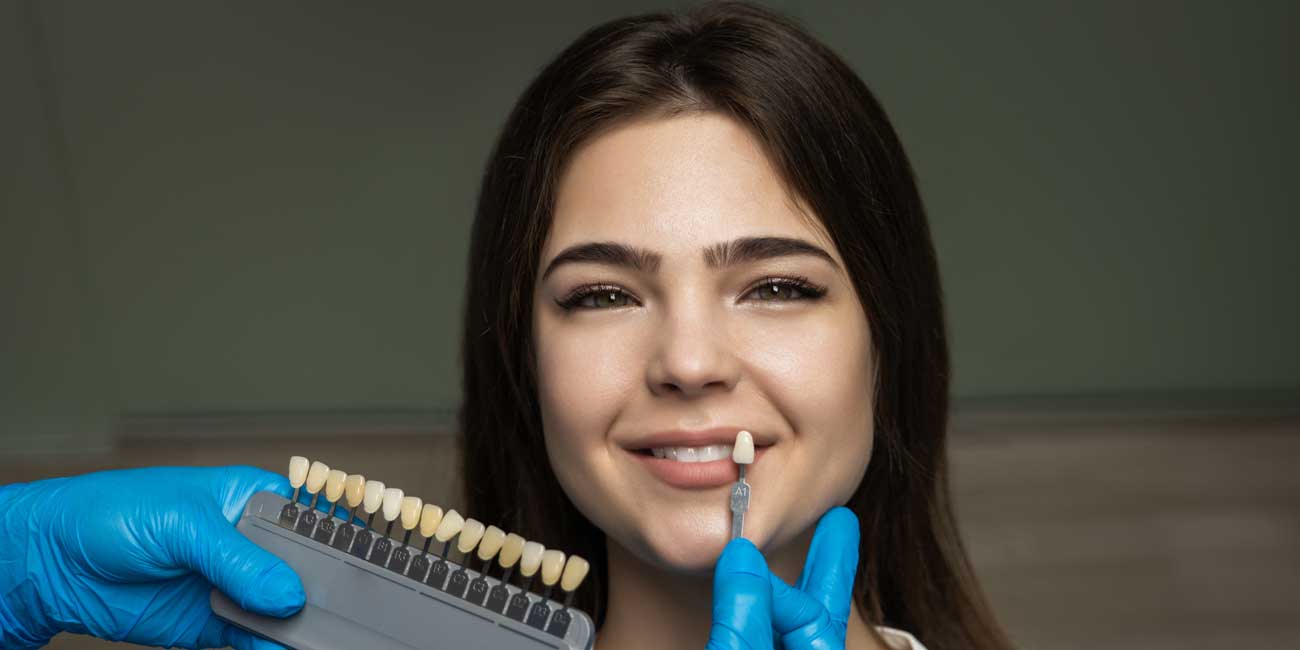
Porcelain veneers create a natural-looking, long-lasting smile that shines like real teeth.
Made from tooth-colored resin, composite veneers are a more affordable option, perfect for minor imperfections.
Personalized treatments to enhance and protect your smile.
See all our smile-enhancing options in one place.
Learn more →Teeth WhiteningProfessional whitening that lifts years of stains fast.
Learn more →Smile MakeoverA personalized plan combining treatments for your ideal smile.
Learn more →InvisalignStraighten teeth discreetly with clear aligners.
Learn more →These are the two ways to change the shape and colour of a tooth from the outside, and they suit very different situations.
Composite bonding is tooth-coloured resin sculpted directly onto the tooth and hardened with a light, usually in a single visit. It is the more conservative option — often little or no enamel is removed — it costs less, and it can be repaired or added to easily. The trade-offs are that composite picks up staining over the years and is more prone to chipping, so it typically needs refreshing sooner.
Porcelain veneers are thin custom shells made in a dental laboratory and bonded to the front of the tooth. Porcelain resists staining almost completely, reflects light much more like natural enamel, and lasts considerably longer. The trade-off is that preparing a tooth for a veneer generally means removing a small amount of enamel, and enamel does not grow back — so a veneer is a long-term commitment rather than a reversible change.
As a rough guide: small chips and single-tooth corrections often suit bonding; changing the appearance of several front teeth, or covering deeper discolouration, usually suits porcelain.
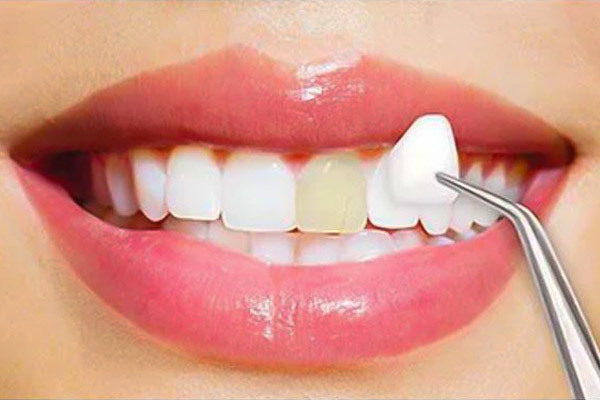
Veneers take two to three appointments spread over a few weeks, and the planning stage matters more than most patients expect.
Consultation and design. We assess the health of your teeth and gums, discuss what you want to change, and take photographs and impressions or a digital scan. For multi-tooth cases we can produce a preview of the proposed result so you can see and approve the shape and proportions before anything irreversible happens.
Preparation. A small amount of enamel is removed from the front surface to make room for the veneer, usually under local anaesthetic. Impressions go to the laboratory, and temporary veneers protect the teeth in the meantime — these also let you live with the new shape for a week or two and tell us if anything needs adjusting.
Fitting. We check the fit, colour and bite carefully before bonding anything permanently. Once you are happy, the veneers are bonded in place and the bite is refined. A short review appointment follows to confirm everything has settled comfortably.
Well-made porcelain veneers commonly last ten to fifteen years, and often longer. They are not permanent, and it is more honest to think of them as a long-lasting restoration that will eventually need replacing than as a one-off purchase.
Caring for them is largely ordinary dental care. Brush twice daily and floss — the tooth underneath can still decay at the margins, which is the most common reason a veneer fails. Keep up regular hygiene appointments so we can check the edges and the gum health around them.
Three things shorten a veneer’s life more than anything else. Grinding and clenching is the biggest: if you grind, a night guard is essential, not optional. Using teeth as tools — opening packaging, biting nails, chewing pens — chips porcelain. And gum recession over time can expose the margin, which is a cosmetic issue rather than a failure but may prompt replacement.
Porcelain does not stain the way natural enamel does, and it also does not whiten — so if you are considering whitening, do it before your veneers are made.
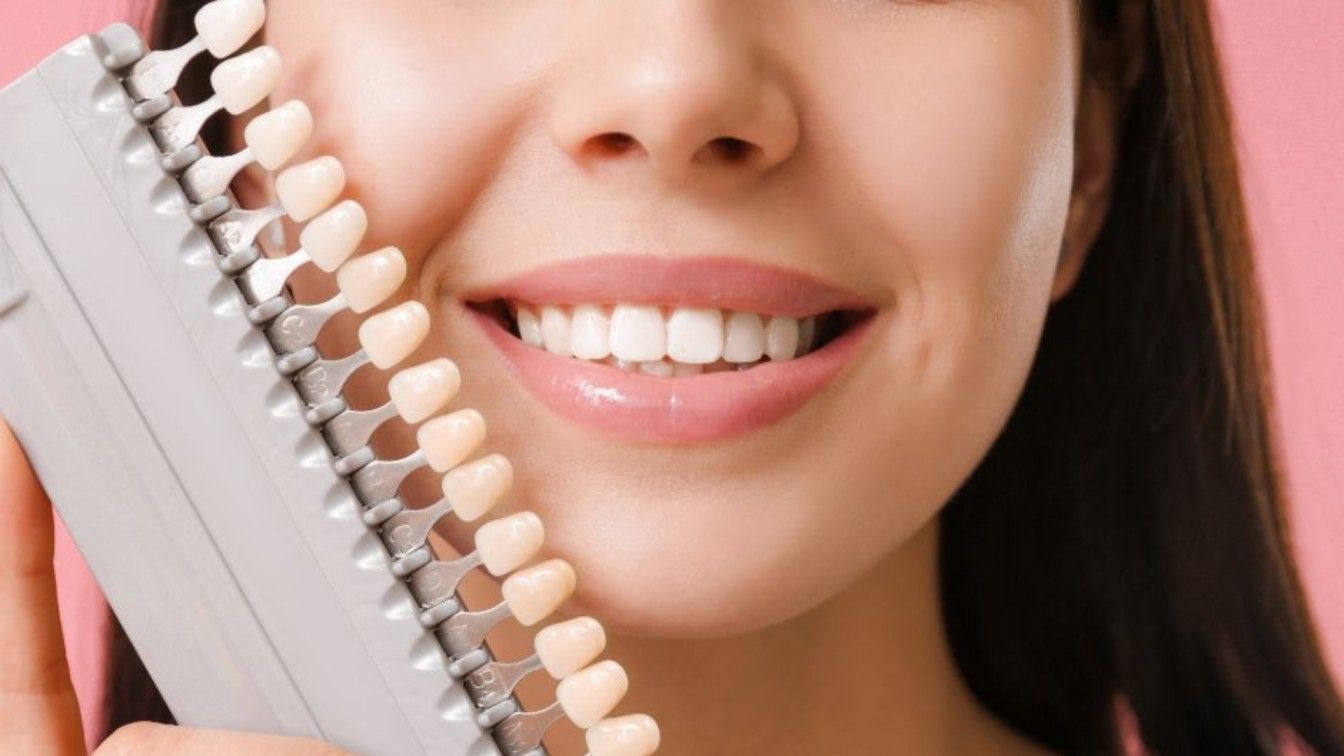
Veneers work best for healthy teeth with a cosmetic problem: discolouration that has not responded to whitening, chips and worn edges, teeth that are slightly small or misshapen, and minor spacing or irregularity where orthodontics is not wanted.
They are not the answer to everything. Significant crowding or bite problems are better solved by moving the teeth than by covering them — orthodontics keeps your natural tooth structure intact, which is almost always the better long-term outcome. Teeth that are heavily filled or structurally weakened usually need a crown rather than a veneer. And active gum disease or untreated decay must be resolved first.
If you grind your teeth, that needs managing before veneers, not after. If you are hoping for a dramatic change in alignment, we will usually suggest a conversation about orthodontics first, even though it is the slower route — because it is frequently the right one.
The honest test is whether the change you want is about colour and shape, or about position. Veneers handle the first extremely well.
Veneers are priced per tooth, so the total depends almost entirely on how many you have. Most cosmetic cases involve the teeth visible when you smile, commonly six to ten on the upper arch, though single-tooth veneers are perfectly common where one tooth is chipped or discoloured.
Beyond the number of teeth, cost is driven by the material and how the veneers are made, and by whether any preparatory work — treating decay, gum therapy, or a night guard for grinding — is needed first. That preparatory work is often partly covered by insurance even where the cosmetic portion is not.
Most extended health plans do not cover purely cosmetic veneers, but they frequently contribute where a veneer or crown is restoring a damaged tooth. We bill insurers directly, offer monthly payment plans, and give you a written estimate covering the whole plan before any treatment starts. Book a consultation with Dr. Dhillon for a figure specific to your teeth — quoting veneers without seeing them would not be meaningful.
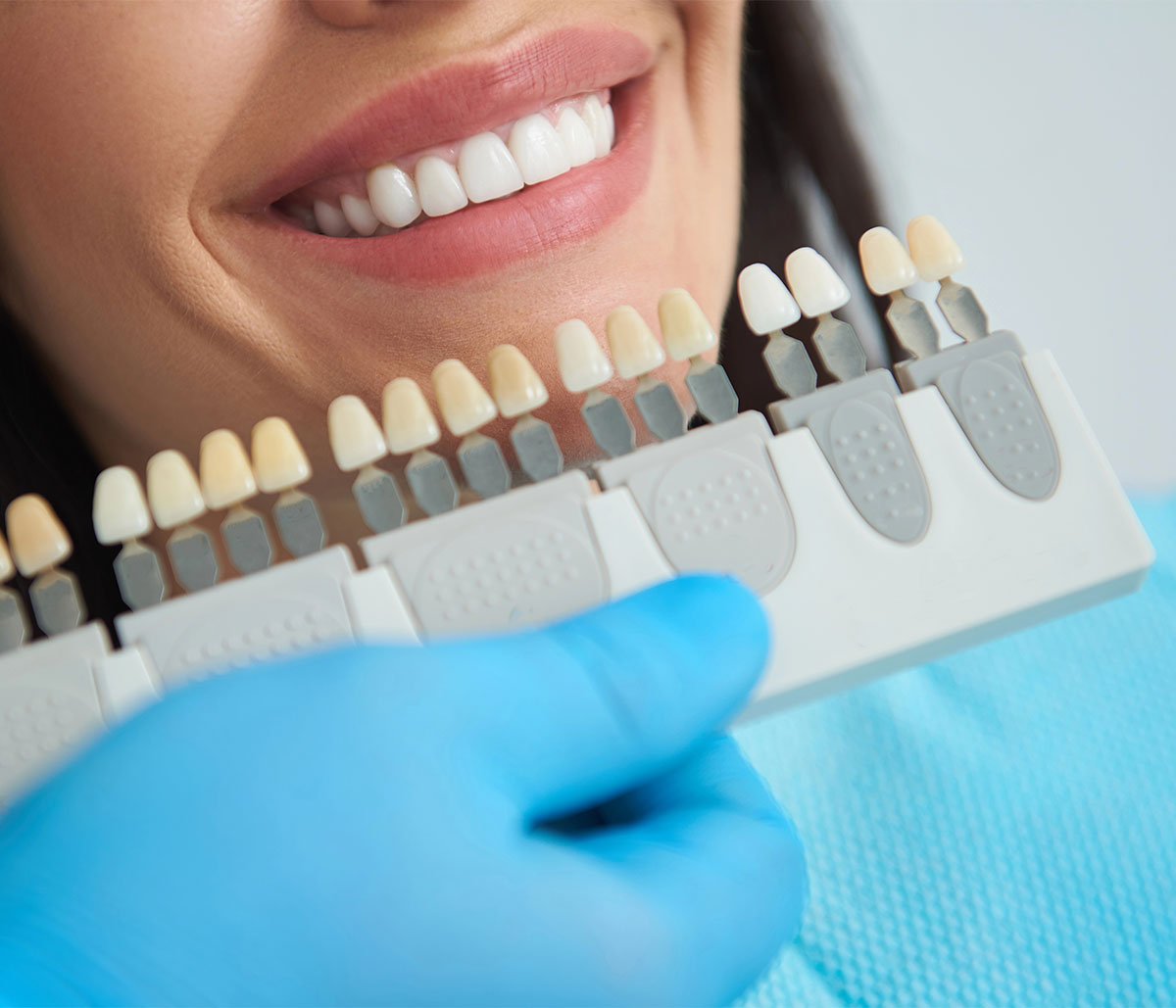
With proper care and maintenance, porcelain veneers last anywhere from 10 to 15 years.
No, getting veneers is a completely painless procedure. The dentist would first numb your gums and the surrounding areas. However, you might feel mild discomfort and pressure post-procedure.
Generally, you can eat whatever you like. However, it is recommended to exclude hard, crunchy, and sticky foods and stick to soft foods during the initial days.
You can use a soft-bristle toothbrush that is gentle on your veneers and natural teeth. This prevents damage to delicate surfaces.