
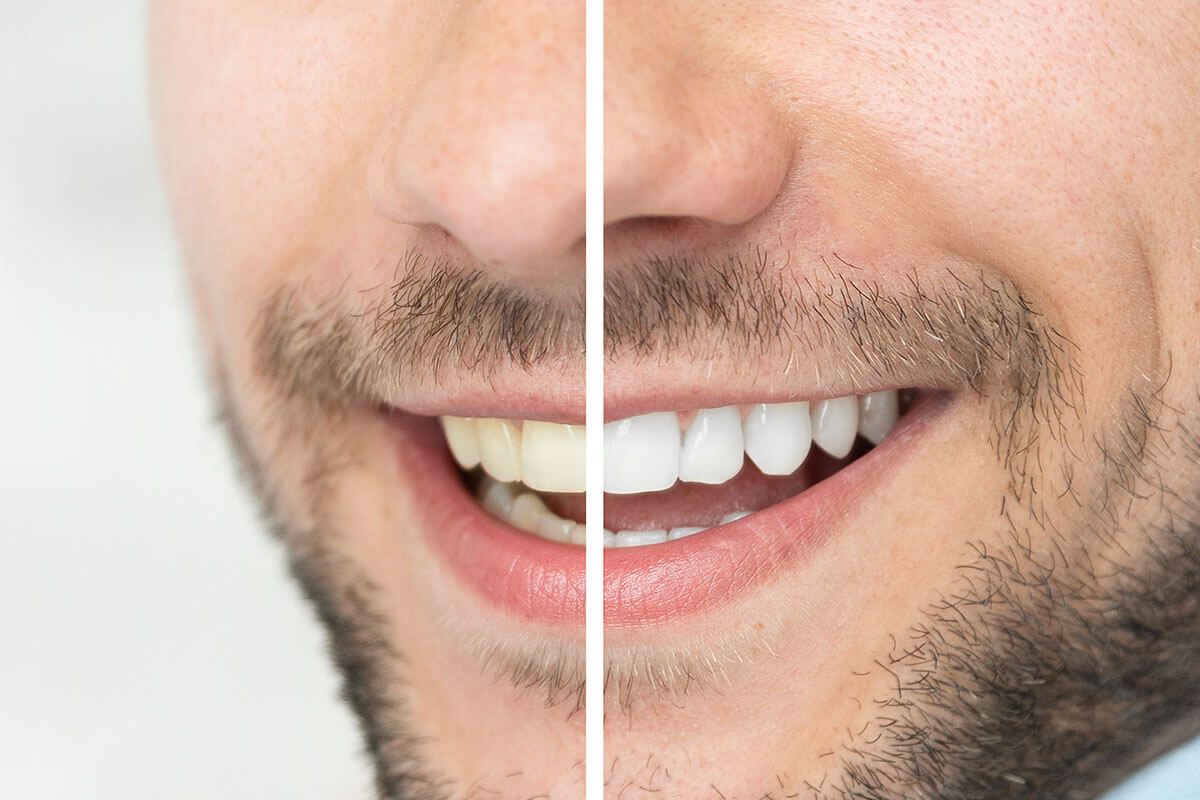
Get a brighter, more confident smile with professional teeth whitening in Vancouver. Our advanced whitening treatments help remove stains and discoloration, delivering safe, natural-looking, and long-lasting results so you can smile with confidence again.
Teeth whitening is a safe, non-invasive cosmetic procedure that aims to make someone’s natural teeth whiter and brighter. There are different teeth whitening methods available, but it’s best to seek professional treatment at the dentist’s office.
At Dentist on Kingsway, we offer expert teeth whitening in Vancouver with advanced solutions that protect your enamel. Choose between custom take-home trays or in-office Zoom teeth whitening for instant results.
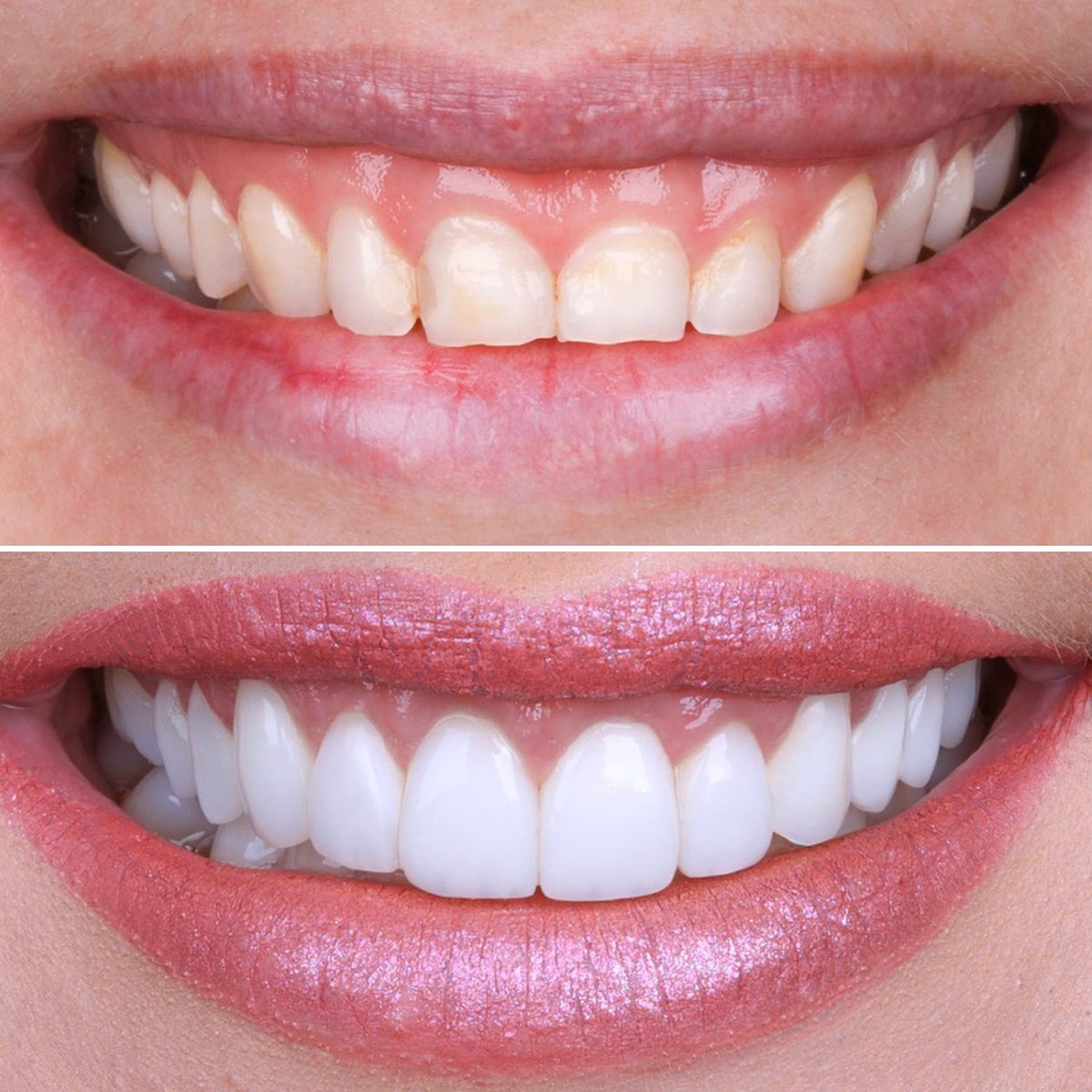
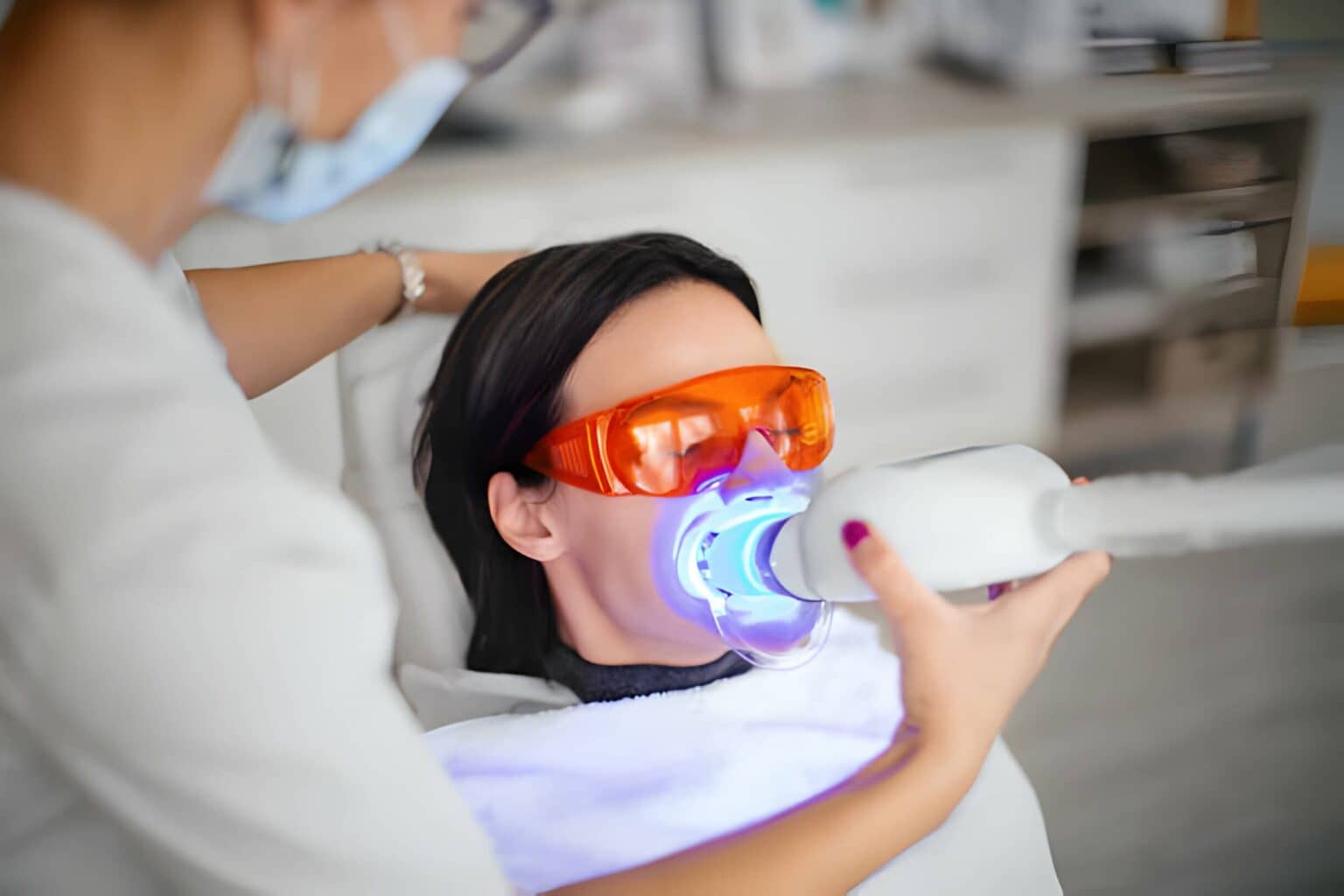
Professional Zoom teeth whitening uses advanced whitening gel to remove deep stains and brighten your smile in as little as one visit.
Our take-home kits include custom trays and professional-grade gel for safe, gradual whitening and long-lasting results at home.
We provide guidance on safe at-home whitening products, including strips, pens, and LED kits, ideal for maintaining a brighter smile between visits.

Both approaches use the same active ingredients — hydrogen peroxide or carbamide peroxide — at different concentrations over different timescales. Neither is universally better.
In-office whitening uses a stronger gel applied by our team with your gums carefully protected, and produces a visible change in a single appointment. It suits people with an event coming up, anyone who would rather not manage trays at home, and patients with sensitive teeth, because we can control exposure precisely and stop early if needed.
Take-home whitening uses custom trays made from impressions of your own teeth and a lower-concentration gel worn for a set period each day over one to two weeks. The result is comparable, the process is gentler, and you keep the trays afterwards for occasional top-ups — which over several years usually makes it the better value.
Many patients do both: an in-office session to establish the shade, then take-home trays for maintenance. What we would steer you away from is over-the-counter kits with generic trays, which leak gel onto the gums and whiten unevenly.

Understanding where the discolouration came from tells you whether whitening will fix it.
Extrinsic stains sit on the outside of the enamel and come from coffee, tea, red wine, dark berries, curry and tobacco. These respond very well to whitening, and often partly to a professional cleaning alone if the discolouration is recent.
Intrinsic stains sit within the tooth. Causes include ageing — enamel thins over time and the yellower dentine beneath shows through — trauma to a tooth, certain antibiotics taken in childhood, and excess fluoride during development. These are less predictable, respond more slowly, and sometimes need veneers or bonding instead.
A quick test: if your teeth have darkened gradually and evenly, whitening will very likely help. If a single tooth is noticeably darker than its neighbours, that is usually an internal problem in that specific tooth and needs a different conversation.
Whitening only works on natural tooth enamel. This is the single most important thing to understand before you start, and it catches people out constantly.
Crowns, veneers, bonding and tooth-coloured fillings do not whiten. They stay exactly the shade they were made. If you whiten your natural teeth and have a crown on a front tooth, that crown will suddenly look darker by comparison — which is why we always whiten first and match new restorations to the final shade afterwards, never the other way round.
A tooth that has had root canal treatment often darkens from the inside and will not respond to external whitening. Internal bleaching is sometimes an option for these, and it is a different procedure.
Whitening is also not recommended during pregnancy or breastfeeding, for children under sixteen, or where there is untreated decay or active gum disease — those need resolving first, both for comfort and for the result.
Whitening is not permanent. How long it lasts depends far more on what you do afterwards than on which method you chose — realistically somewhere between several months and a couple of years.
The first 48 hours matter most, because enamel is temporarily more porous. Avoid coffee, tea, red wine, dark sauces and tobacco during that window. After that, ordinary sense applies: rinse with water after staining drinks, use a straw for iced coffee, and keep up your regular hygiene appointments — a professional cleaning removes surface staining before it has a chance to set.
If you have take-home trays, an occasional top-up night every few months maintains the shade far more comfortably than letting it fade and starting again. Ask us for the schedule that suits your teeth rather than guessing.
Professionally supervised whitening does not damage enamel. The peroxide works by breaking down the pigment molecules trapped within the tooth, not by stripping away the tooth surface, and this has been studied extensively over several decades.
The realistic side effects are temporary. Some patients get sensitivity to cold during treatment and for a day or two afterwards; this fades, and a desensitising toothpaste in the weeks beforehand reduces it considerably. Mild gum irritation can happen if gel contacts the gums, which is precisely what custom-fitted trays and professional isolation are designed to prevent.
The real risks come from unsupervised whitening — generic one-size trays that leak, unregulated products bought online at unknown concentrations, and repeated over-whitening chasing a shade that natural teeth do not reach. Having a dentist check first also ensures the discolouration is not masking decay or a cracked tooth.
Whitening is the treatment patients most often ask the price of before anything else, so here is a straight answer about what drives it rather than a number that will not match your teeth.
Dentists in British Columbia set their own fees, using the BC Dental Association’s annual suggested fee guide as a reference point rather than a fixed price list. What moves a whitening quote is mostly which method you need:
Whitening is cosmetic, so dental insurance almost never covers it, and the Canadian Dental Care Plan does not either — the CDCP covers preventive, diagnostic, restorative and surgical care, not appearance. What insurance may cover is the cleaning and the checkup we do first, which are worth having anyway.
One thing worth knowing before you spend anything: whitening does not change crowns, veneers, bonding or fillings. If you have restorations on your front teeth, whitening the natural teeth around them can leave a visible mismatch, and we will point that out at the consultation rather than after. Deep internal staining from tetracycline or an old root canal also responds differently to surface staining from coffee, tea and red wine.
You will get the figure for your own mouth in writing before anything starts.
Results fade — how fast depends almost entirely on what you put in front of your teeth afterwards. A realistic expectation is months rather than years for most people, with occasional top-ups from your take-home trays keeping it steady.
Treatment here is led by Dr. Harpreet Dhillon, who graduated with honours in pediatrics from New York University College of Dentistry and completed two years of implant training through the Vancouver MaxiCourse® of the American Academy of Implant Dentistry. The practice holds a 4.8 star average across 361 Google reviews.
Yes, yellow teeth can become white again through professional dental care treatments and at-home remedies.