

Fluoride treatments are recommended for patients of all ages, especially those who:
Fluoride treatment is a fast, comfortable procedure that can be completed during your regular dental cleaning or checkup.
The process includes:
The entire treatment usually takes only a few minutes.
To maximize the benefits of fluoride treatment, we recommend:
These simple habits work together to keep your teeth strong and healthy.


Fluoride is not a coating that sits on the tooth. It works by becoming part of the enamel itself, and understanding that explains why professional application differs from toothpaste.
Your teeth are in a constant cycle. Acid produced by bacteria after you eat pulls minerals out of the enamel — demineralisation. Between meals, saliva returns minerals to the surface — remineralisation. Decay happens when the first outpaces the second.
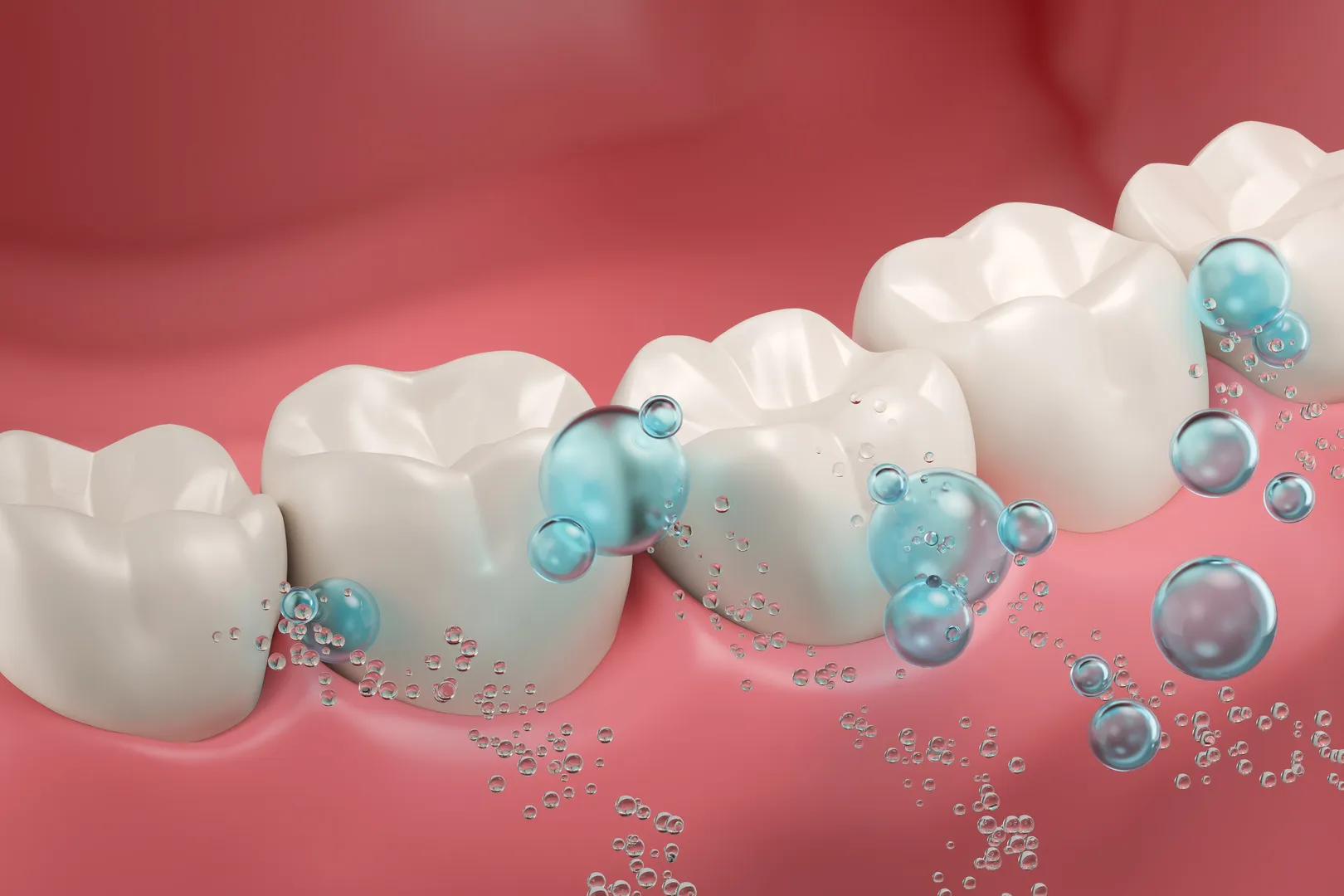
Fluoride tips that balance three ways. It speeds remineralisation, drawing calcium and phosphate back into weakened enamel. It changes the mineral itself into fluorapatite, which is markedly more resistant to acid than the original. And it interferes with the bacteria, reducing their ability to produce acid at all.
The practical consequence is that early decay — a white spot lesion that has not yet broken through the surface — can genuinely be reversed with fluoride rather than drilled. That is the window professional application is aimed at, and it is why we recommend it before a filling is needed rather than after.
Both matter, and they do different jobs.
Toothpaste delivers a low concentration twice a day, every day. That frequency is exactly the point — it maintains a low background level of fluoride in the mouth, which is where most of the day-to-day protection comes from. It is the single most valuable fluoride exposure most people get.
Professional fluoride varnish delivers a much higher concentration in one application, painted directly onto the tooth surfaces at your appointment. It sets on contact with saliva and releases fluoride slowly over several hours, giving a level of uptake that toothpaste cannot reach.
Varnish is quick, has no unpleasant taste for most people, and does not involve trays or gagging. Avoid hot drinks and hard foods for a few hours afterwards and leave brushing until that evening so it has time to work.
Neither replaces the other. Toothpaste is the daily baseline; professional application is the periodic boost, most valuable for people at higher risk of decay.
Fluoride varnish is useful for most patients and genuinely important for some. The people who gain most are:
Children and teenagers, whose newly erupted permanent teeth have immature enamel that takes up fluoride readily and is most vulnerable in the first years after eruption.
Anyone with a history of cavities. Past decay is the single best predictor of future decay.
People with dry mouth. Saliva is your natural defence, so anything that reduces it — many common medications, some medical conditions, radiotherapy to the head or neck — sharply raises risk. This group is often unaware of it.
Orthodontic patients in fixed braces, where brackets make cleaning difficult and white spot lesions around them are a common and permanent disappointment.
Patients with gum recession, because exposed root surfaces are softer than enamel and decay considerably faster.
Also worth it if you have crowns, bridges or many fillings, where decay at the margins is the usual failure point.
It is a fair question and it deserves a straight answer rather than dismissal.
Fluoride at the doses used in dentistry has been studied for more than seventy years and is endorsed by the Canadian Dental Association, Health Canada and the World Health Organization. The professional consensus is settled: at these concentrations it is safe and effective.
The genuine caution is dental fluorosis — faint white flecking on enamel — which can occur if young children swallow too much fluoride while their permanent teeth are still forming under the gum. It is cosmetic rather than harmful, and it is entirely preventable with correct amounts: a rice-grain smear of toothpaste under age three, a pea-sized amount from three to six, and supervision so young children spit rather than swallow.
Professionally applied varnish is a controlled dose given a few times a year by a trained clinician, which is a very different exposure from daily ingestion. If you have concerns, raise them — we would far rather have the conversation than have you quietly decline something useful.
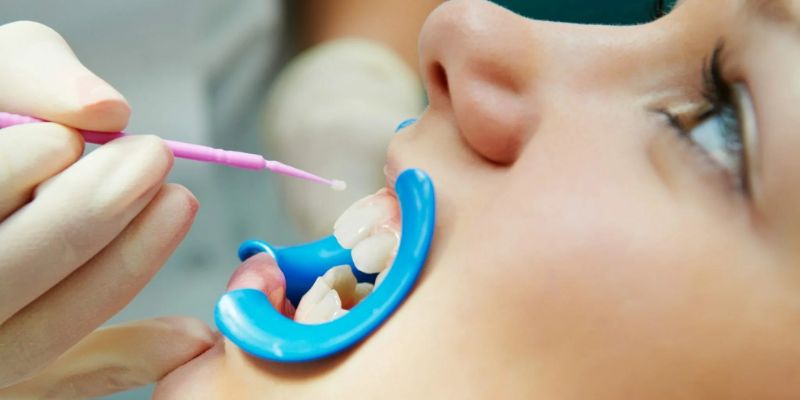
The fluoride treatment used in most dental offices today is a varnish rather than the foam trays many adults remember from childhood. It is painted straight onto the teeth with a small brush, sets on contact with saliva, and takes under a minute. There is no tray, no gagging, and nothing to hold in your mouth — which is why it works so much better for small children and for anyone with a strong gag reflex.
Fluoride varnish sticks to the enamel and releases fluoride over the hours that follow, which is what makes it more effective than a rinse that is swallowed or spat out within seconds. We ask you to avoid hot drinks and hard or crunchy food for a few hours afterwards, and to leave brushing until the next morning so it has time to work.
A varnish application is one of the least expensive things we do, and it is usually applied at the end of a cleaning rather than booked on its own. Preventive services, including fluoride applications, are covered under the Canadian Dental Care Plan for eligible patients, and most private plans cover it for children as a matter of course. We work from the BC Dental Association Suggested Fee Guide and will confirm the fee before we apply it.
Yes. Professional fluoride treatments use a controlled, safe amount of fluoride to strengthen enamel and are recommended for both children and adults.
Most patients benefit from a fluoride treatment at their regular checkups, typically every six months, though we tailor this to your needs.
Anyone prone to cavities, or with sensitive teeth, dry mouth, or early signs of decay can benefit, as can children whose teeth are still developing.
Yes. Fluoride can help remineralize weakened enamel and may stop or reverse very early stages of tooth decay before a permanent cavity develops.
Professional fluoride treatments are considered a safe preventive option for both children and adults when recommended and applied appropriately by a dental professional.
No. Professional fluoride treatment is quick, painless, and non-invasive. It can usually be applied during a routine dental cleaning or checkup.
A professional fluoride application usually takes only a few minutes and can be completed during your regular dental appointment.
Yes. Fluoride can strengthen tooth surfaces and help reduce sensitivity, particularly when sensitivity is related to weakened enamel or exposed tooth surfaces.
The recommended frequency depends on your oral health, cavity risk, sensitivity, age, and other individual factors. Your dentist can recommend a fluoride schedule based on your specific needs.
Fluoride toothpaste provides important daily protection, while professional fluoride treatment can provide additional concentrated protection for patients who have a higher risk of cavities or sensitivity.