We are now accepting the Canadian Dental Care Plan —
Learn More
Invisalign Vancouver Platinum+ Provider
Invisalign in Vancouver from a Platinum Plus provider, a tier awarded on annual case volume. We scan your bite, show you the projected movement before you commit, and put the package, the refinements and the retainers in one written quote.
Dentist on Kingsway is a Platinum Plus Invisalign® Provider in Vancouver!
Dr. Harpreet Dhillon is a Platinum Invisalign® Provider, recognized for his advanced education, clinical skill, and extensive experience in Invisalign treatment. He has also earned a prestigious fellowship award, further reflecting his commitment to excellence in dental care.
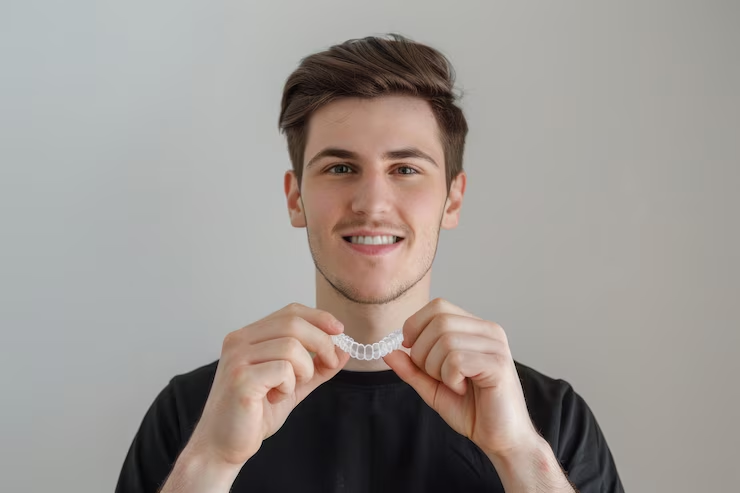
Invisalign aligners are nearly invisible, removable, and more comfortable than traditional braces. Enjoy the freedom to eat what you like, maintain your oral hygiene with ease, and smile confidently throughout your treatment journey.
At Dentist on Kingsway, we believe everyone deserves a smile they’re proud of, healthy, aligned, and beautiful. If you’ve been putting off straightening your teeth because you don’t want bulky braces, wires, or hardware, Invisalign could be your ideal solution. Our clear aligners offer a discreet, comfortable, and effective way to align your teeth and enhance your smile without drawing attention.
Located in Vancouver, our practice combines advanced Invisalign technology with personalized care to deliver results you’ll love. From your first consultation to every step along the way, we’re here to support you. See how Invisalign at Dentist on Kingsway can transform your smile and boost your confidence.
Lower front teeth are in front of your upper teeth when mouth is closed.
Overbite
Upper front teeth overlap with your lower front teeth when mouth is closed.
Open Bite
Upper and lower teeth don’t touch when your mouth is closed.
Crowded Teeth
Crowded teeth occur when there’s not enough space in the jaw.
Crossbite
Some upper teeth are sitting inside your lower teeth when mouth is closed.
Gap Teeth
When you have extra space between two or more of your teeth.
Benefits of Invisalign
Invisalign offers several key benefits that set it apart from traditional braces:
Discreet Appearance - Clear aligners are nearly invisible, letting you smile with confidence.
Comfort – Smooth plastic design ensures comfort, free from metal irritation.
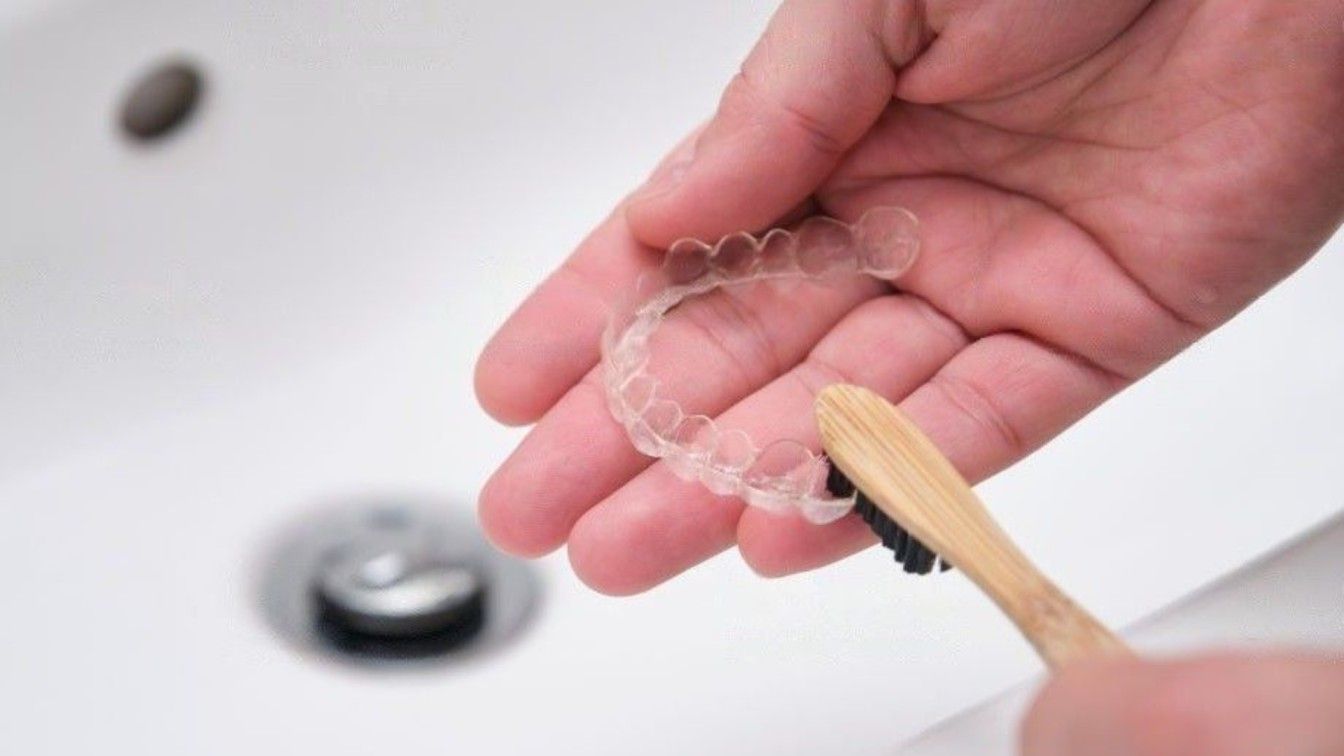
Removable – Easily remove aligners for eating, drinking, brushing, and flossing, making oral hygiene simple.
Fewer Office Visits – Requires fewer trips to the orthodontist with multiple aligner sets at once.
Predictable Results – Advanced 3D scanning lets you preview your smile before treatment.
Improved Oral Health – Straighter teeth are easier to clean, reducing the risks of cavities and gum disease.
The Invisalign Treatment Process
Step 1 – Assessment
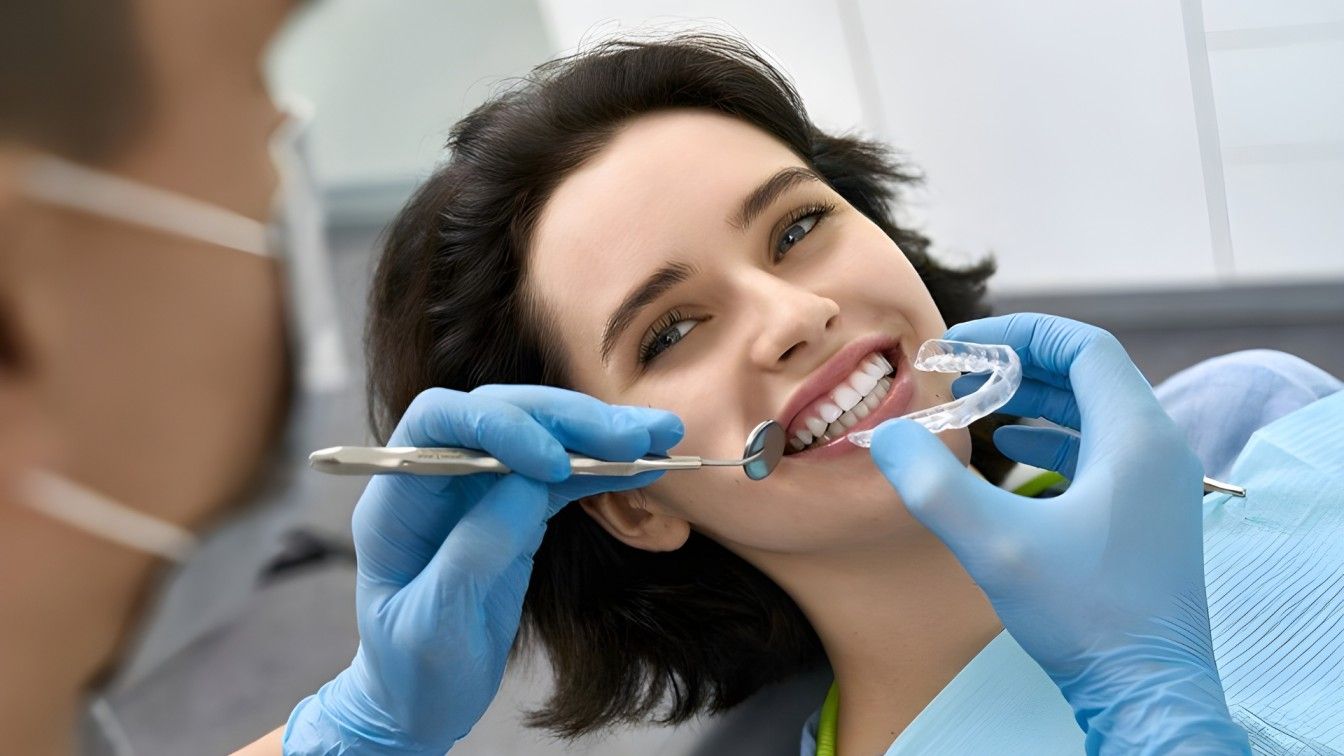
The Invisalign treatment process begins with a consultation where Dr. Dhillon will assess your teeth and discuss your treatment goals. If Invisalign is right for you, we’ll take digital impressions of your teeth using advanced 3D scanning technology, creating a custom treatment plan.
Step 2 – Treatment Plan
Once your aligners are ready, you’ll begin wearing them, typically for 20-22 hours each day. Every 1-2 weeks, you’ll switch to the next set of aligners, which will gradually shift your teeth into the desired position.
Step 3 – Fitting & Monitoring
Throughout your treatment, we’ll monitor your progress to ensure everything is going smoothly. Invisalign aligners are designed to fit comfortably, but we will check in with you periodically to make any adjustments as needed. Treatment times vary, but most people finish their treatment in 12–18 months.
Why Choose Dentist on Kingsway for Invisalign in Vancouver?
Platinum+ Invisalign Provider: As a Platinum+ Provider, our team has extensive experience delivering exceptional results.
Advanced Technology: We use the latest Invisalign tools and techniques for effective, comfortable care.
Personalized Treatment: Every plan is tailored to meet your unique needs and lifestyle.
Expert Care: Our expert Invisalign dentist team ensures the highest level of treatment from start to finish.
Comprehensive Support: We guide you through each step of the Invisalign process with full patient support.
Trusted for Beautiful Smiles: Count on us to help you achieve a healthy, confident smile.
Ready for a straighter, more confident smile? At Dentist on Kingsway, we offer clear, comfortable Invisalign treatments tailored to you. Let our expert team guide you every step of the way. Start your journey to the perfect smile today!
How Much Does Invisalign Treatment Cost in Vancouver?
Treatment cost can vary depending on complexity of case. For an accurate cost estimate specific to your dental conditions and treatment requirement, please schedule a consultation with Dr. Dhillon. It will help us assist you better.
Affordable financial options such as monthly payment plans are also available.
Most Invisalign cases at our Kingsway clinic run between six and eighteen months, though the honest answer is that your timeline depends on how far your teeth actually need to move. Mild crowding or a single small gap can finish in well under a year; a case involving significant rotation or bite correction takes longer.
Two things influence the schedule more than anything else. The first is wear time. Aligners need to be in your mouth 20 to 22 hours a day, and every hour they spend in a pocket is an hour of treatment that did not happen — patients who are consistent finish close to the projected date, and patients who are not can add months. The second is biology: teeth move through bone at their own pace, and that pace varies from person to person.
You will change to a new set of aligners roughly every one to two weeks, and see us for a short progress check every six to eight weeks. At your consultation Dr. Dhillon maps your case in 3D and gives you a projected finish date before you commit to anything.
Clear Aligners vs Traditional Braces
Clear aligners and braces are both proven ways to straighten teeth, and neither is universally better. The right choice depends on your case and on your habits.
Aligners win on appearance, comfort and convenience. They are nearly invisible, they come out for meals so there are no food restrictions, and you brush and floss normally. Braces win on predictability in complex cases and on removing compliance from the equation entirely — they are fixed in place, so they work whether or not you remember them.
For mild to moderate crowding, spacing and many bite issues, Invisalign now handles cases that once required brackets. For severe crowding, large gaps, or teeth that need substantial rotation, traditional braces still deliver the more predictable result. If you are weighing the two, our detailed Invisalign vs braces comparison breaks down cost, treatment time and comfort side by side.
Invisalign for Teens and Adults
Adults make up a large share of the Invisalign patients we treat in Vancouver, and the reason is usually the same: they want their teeth straightened without spending a year in visible metal at work. Aligners make that realistic. They also suit adults who had orthodontic treatment as teenagers and stopped wearing a retainer — relapse cases are common, and often straightforward to correct.
For teenagers the decision usually comes down to temperament rather than dentition. Invisalign Teen includes wear indicators and replacement aligners for the ones that inevitably go missing, and it works well for organised teens who keep the trays in. For a teenager likely to forget, braces remove the problem by staying put. Dr. Dhillon graduated with honors in pediatrics and treats children and teens daily, so this is a conversation worth having in the chair rather than guessing at home.
Retainers: Keeping Your Results
Treatment does not end when the last aligner comes out. Teeth have a natural tendency to drift back toward where they started, and a retainer is what prevents that. This is true of every orthodontic treatment, aligners and braces alike — there is no version where the result maintains itself.
Retainers are typically worn full time for a period after treatment, then reduced to nights indefinitely. Factor them into your plan from the beginning, and treat a lost retainer as urgent rather than optional: most of the relapse cases we see are simply retainers that quietly stopped being worn. We will fit yours and walk you through the schedule before your treatment finishes.
Invisalign aligners are comfortable and smooth, with no metal brackets or wires that can irritate your mouth. You may feel some pressure when switching to a new set, but this is normal and temporary.
Yes — adults are a large share of the Invisalign patients we treat. Aligners are especially popular with working professionals who want a discreet option, and with adults correcting relapse after childhood orthodontics.
Cost depends on the complexity of your case and how long treatment takes, so we quote it individually rather than advertising a single figure. Book a consultation with Dr. Dhillon for an accurate estimate; monthly payment plans are available and we bill insurers directly.
Many extended health plans include a lifetime orthodontic maximum that applies to Invisalign the same way it applies to braces. It is worth checking that figure before you decide, and we will help you confirm what your plan covers.
Usually a short progress check every six to eight weeks, which is less frequent than the four to six weeks typical with braces. You change to a new set of aligners yourself roughly every one to two weeks at home.
Often, yes. Mild to moderate overbites and crossbites are routinely treated with aligners, sometimes combined with small tooth-coloured attachments or elastics. Skeletal bite discrepancies are a different matter and may need braces or a referral — a 3D scan will tell us which applies to you.
Call us at 604-558-2442 as soon as you notice. Depending on where you are in the series we may ask you to move to the next set or wear the previous one while a replacement is ordered. Do not simply go without — gaps in wear are what push treatment off schedule.