

Is jaw pain, headaches, jaw clicking, or difficulty chewing affecting your daily life? Our experienced dental team is here to help with customized TMJ treatment solutions designed to address the underlying cause of your discomfort.
At Dentist on Kingsway, we provide comprehensive TMJ treatment in Vancouver, BC, focused on reducing pain, improving jaw function, and supporting long-term oral health. Through personalized care and treatment planning, we help patients find lasting relief and get back to living comfortably.
Every patient experiences TMJ discomfort differently. That’s why we create customized treatment plans designed to relieve pain, improve jaw function, and support lasting oral health.
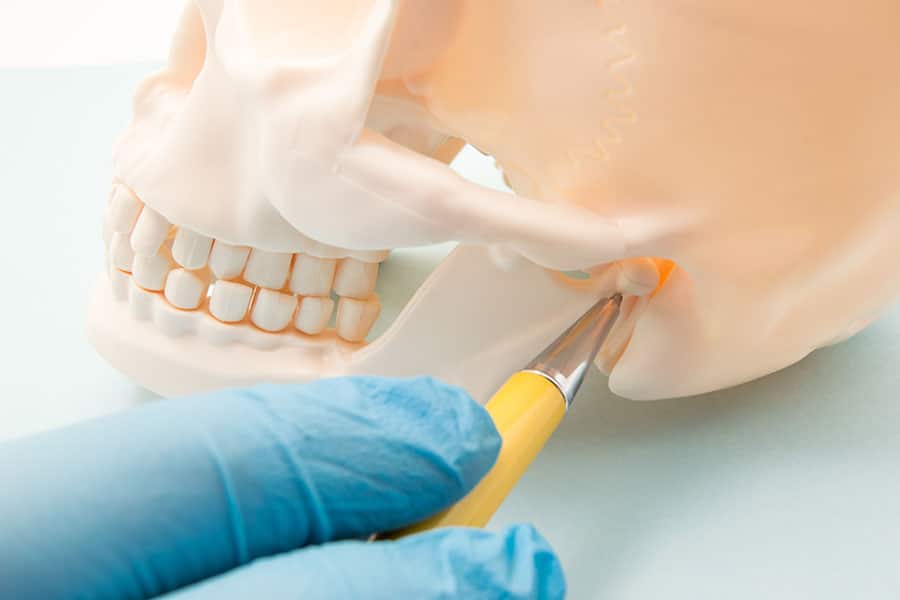
TMJ treatment may benefit individuals experiencing jaw pain, facial discomfort, teeth grinding or clenching (bruxism), headaches, or difficulty chewing. If you notice clicking, popping, locking of the jaw, or discomfort when opening and closing your mouth, a professional evaluation may help identify the cause.
At Dentist on Kingsway, we provide personalized TMJ treatment plans designed to reduce discomfort, improve jaw function, and support long-term oral health. Our goal is to help patients achieve lasting relief and a better quality of life through customized care.
The temporomandibular joints connect your jaw to your skull, and when they are strained or misaligned the result can be jaw pain, clicking, headaches, and difficulty chewing. TMJ treatment focuses on relieving that discomfort and addressing what is causing it.
Treatment is tailored to the cause. Many patients find relief with a custom night guard that eases pressure on the joint and protects teeth from grinding. We may also recommend bite adjustments, jaw exercises, or simple lifestyle changes to reduce strain.
If jaw pain, clicking, or headaches are affecting your daily life, it is best not to wait. Early treatment is usually simpler and can keep the problem from worsening. We examine your jaw, identify the cause, and create a plan to get you comfortable again.
Related care for a comfortable, healthy smile.
The temporomandibular joints are the two hinges connecting your jaw to your skull, just in front of each ear. They are among the most heavily used joints in the body, and TMJ disorder is rarely traceable to a single cause — usually several factors overlap.
Clenching and grinding is the most common contributor. Much of it happens during sleep, so patients often have no idea they are doing it until a partner mentions the noise or we spot the wear pattern on the teeth.
Stress feeds directly into that, which is why symptoms so often flare during difficult periods and settle afterwards.
Bite problems — teeth that do not meet evenly, missing teeth, or a restoration that sits slightly high — make the muscles work harder to find a comfortable position.
Injury and arthritis account for a smaller share: a blow to the jaw, whiplash, or degenerative change in the joint itself.
Posture, prolonged dental work, nail biting and habitually chewing on one side all contribute at the margins.
There is no single test for TMJ disorder, which is part of why patients often spend a long time without answers. Diagnosis is a process of careful examination and exclusion.
We start with your history: where the pain is, when it is worst, whether it wakes you, what makes it better, and whether you are aware of clenching. Morning pain and stiffness point strongly toward night-time grinding; pain that builds through the day points elsewhere.
The examination looks at how far your jaw opens and whether it deviates to one side, listens and feels for clicking, popping or grating, palpates the joint and the chewing muscles for tenderness, and assesses how your teeth meet. We also check the wear facets on your teeth, which record grinding history whether or not you are aware of it.
Imaging is used when it will change the plan — X-rays to look at the joint and rule out dental causes, and occasionally more detailed imaging where joint damage is suspected. We also screen for the conditions that mimic TMJ disorder, including toothache, sinus problems, ear infection and neuralgia, because treating the wrong thing helps nobody.
TMJ treatment follows a deliberate order: the least invasive approaches first, because most patients improve on them and because the alternatives are difficult to undo.
First line. Self-care and habit change, a custom night guard, jaw exercises, and short-term anti-inflammatory medication. A large majority of patients improve substantially at this stage alone.
Second line. Physiotherapy targeted at the jaw and neck, trigger-point work on the chewing muscles, and stress management where clenching is clearly stress-driven. Adjusting a high restoration, or replacing missing teeth so the bite is balanced, belongs here too.
Further options. Where conservative treatment has genuinely been given time and has not worked, options include injections into the muscles to reduce overactivity, and referral to a specialist for joint-directed treatment.
Surgery is a last resort for a small minority with structural joint damage. Be cautious of any plan that begins with irreversible work on your teeth — extensive reshaping or full-mouth reconstruction as a first response to jaw pain is not the conservative path, and it cannot be reversed if it does not help.
A guard separates the teeth so the muscles cannot clench into a locked position, distributes force evenly instead of concentrating it on a few teeth, and protects enamel, restorations and the joint itself from years of wear.
Custom matters here. A guard made from impressions of your own teeth fits precisely, stays put overnight and does not alter your bite. Boil-and-bite guards from a pharmacy are bulky, tend to be spat out during sleep, and in some cases encourage more clenching because the jaw searches for a stable position against a soft surface.
Expect a short adjustment period of a few nights. Bring it to your check-ups so we can inspect the wear pattern — it tells us whether the grinding is easing, and it is one of the few objective measures we have.
Between appointments, a handful of changes make a genuine difference — and some popular advice makes things worse.
Rest the joint. Soft foods during a flare-up, cut into smaller pieces. Avoid chewing gum entirely, and avoid hard, chewy foods such as bagels, tough meat and ice. Do not open wide unnecessarily — support your chin when you yawn.
Heat and cold. Moist heat for fifteen to twenty minutes relaxes tight muscles and suits most patients. Cold suits acute swelling or sharp pain after injury. Use whichever gives you relief.
Mind the daytime habit. Your teeth should only touch when you swallow. Check in with yourself periodically during the day; many people clench at a desk without noticing. Lips together, teeth apart, tongue resting on the roof of the mouth is the position to return to.
Gentle exercises, not aggressive stretching. Slow controlled opening and closing within a comfortable range, several times daily. If an exercise increases pain, stop and tell us rather than pushing through.
Most people arriving with jaw pain have already been told it is stress, or been given a nightguard that did not help. The first appointment is about working out which of several different problems you actually have, because they are not treated the same way.
We take a history first. When the pain started, what makes it worse, whether it clicks, whether it locks, whether you wake with it or build to it through the day, and whether you are getting headaches or ear pain with it. That conversation narrows things more than any single test does.
Then an examination. We measure how far your jaw opens and whether it deviates to one side, feel the joint and the muscles around it while you open and close, check how your teeth meet, and look for the wear patterns that grinding leaves behind.
Imaging if it is needed. An X-ray or 3D scan tells us about the bone and rules out the things that are not TMJ at all — a cracked tooth or an infection can produce pain that feels identical.
You leave with an explanation of what we think is happening and the options in order of how invasive they are, starting with the least. Many cases improve with jaw rest, targeted exercises and a properly fitted appliance, and we would rather try that first than reach immediately for anything irreversible.
TMJ is the area where quotes vary most between practices, because “TMJ treatment” covers everything from an adjustment appointment to a custom appliance to a long-term bite plan. Dentists in British Columbia set their own fees against the BC Dental Association’s annual suggested fee guide.
What changes the figure:
Coverage is worth checking carefully, because TMJ sits awkwardly between plans. Some dental plans cover appliances under a separate category with its own maximum; some treat it as a major service; and some extended health plans cover it instead of the dental plan. The Canadian Dental Care Plan covers diagnostic and preventive services and a range of restorative and surgical care. We will send a predetermination to your insurer before treatment starts so you know your share in writing rather than afterwards.
Treatment here is led by Dr. Harpreet Dhillon, who graduated with honours in pediatrics from New York University College of Dentistry and completed two years of implant training through the Vancouver MaxiCourse® of the American Academy of Implant Dentistry. The practice holds a 4.8 star average across 361 Google reviews.
In some cases, Botox may be considered as part of a TMJ management plan. Eligibility depends on the patient’s condition and treatment goals. A consultation can help determine whether this option is appropriate.
Common symptoms include jaw pain, facial discomfor