
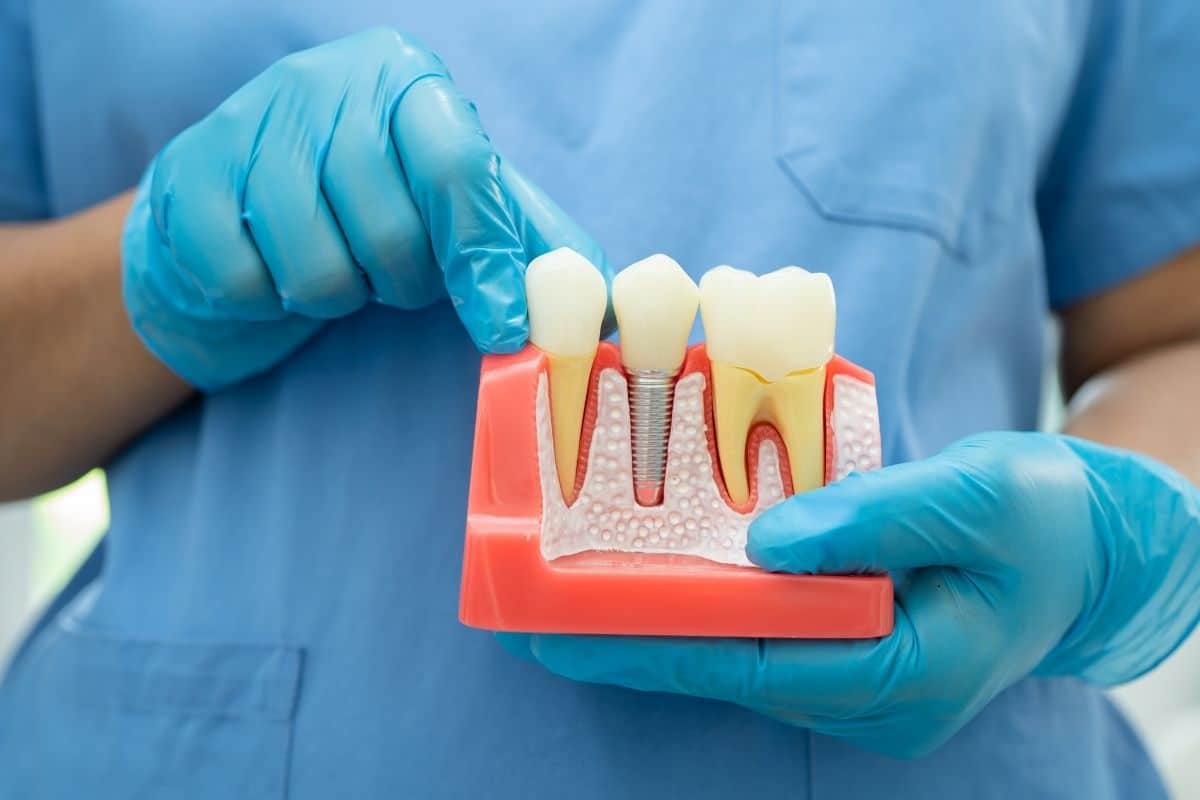
Are you dealing with an excruciating toothache? Root canal therapy might be the answer you’re seeking. It is the safest way to deal with infected or damaged teeth without having to get an extraction.
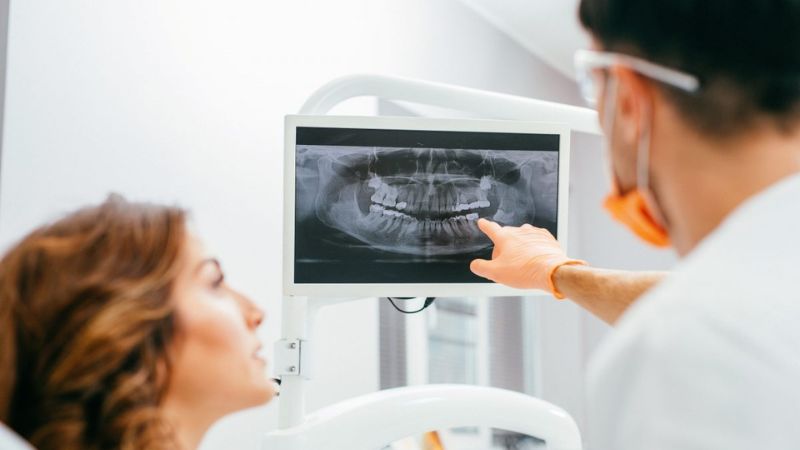
Root canal treatment is a dental procedure that helps you get rid of severe pain caused by a damaged tooth. When the inner part of your tooth, called the pulp, becomes infected due to decay or injury, it can cause pain and discomfort. During a root canal, your dentist or root canal specialist in Vancouver will carefully remove the infected pulp, clean the inside of the tooth, and then seal it to prevent future infections.
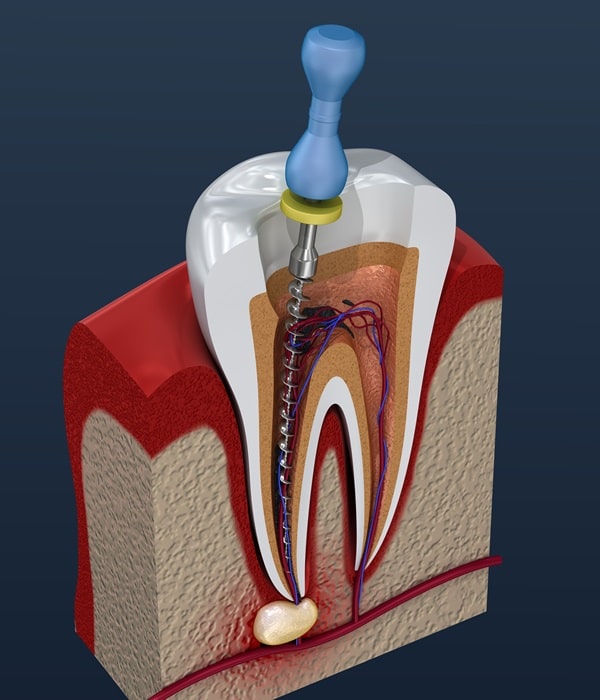
Our root canal specialists offer a simple and effective treatment which involves the following key steps:
Numbing: We numb the area around your tooth to ensure a painless experience.
Removing the Infection: A small opening is made in the tooth to remove the infected pulp and clean the area.
Sealing the Tooth: After cleaning, the tooth is sealed with a special material, and a crown may be placed to restore its strength.
We carefully remove the infected pulp, clean and disinfect the canal, then seal it to prevent reinfection. The procedure is performed under local anesthesia for your complete comfort.
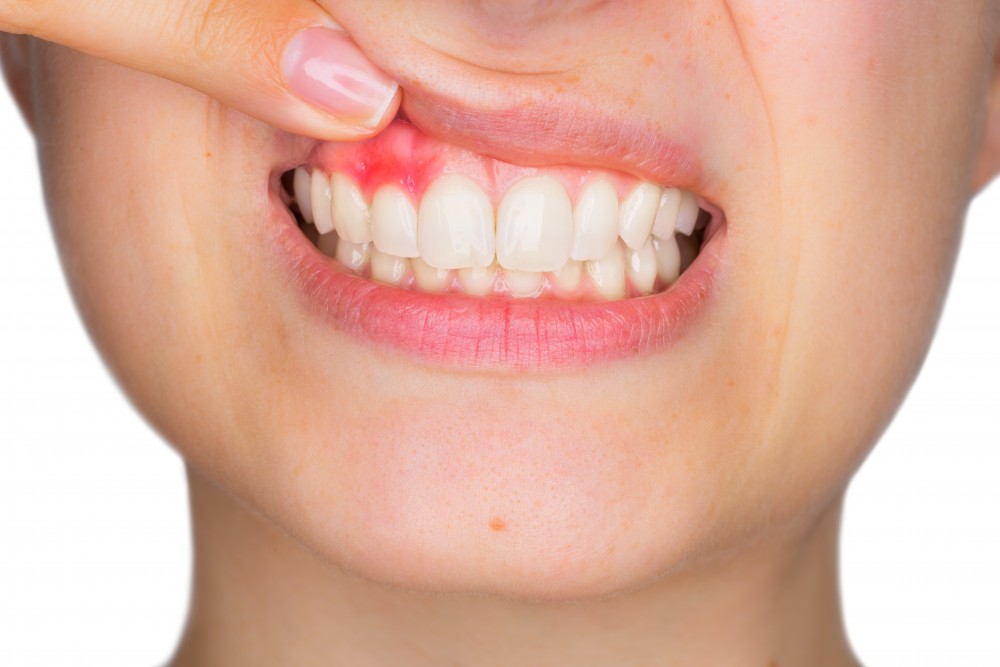
Persistent toothache, sensitivity to hot or cold, or swelling near the gums can signal an infected tooth nerve. A root canal can stop the infection from spreading and save your tooth from extraction.
Root canals not only relieve pain but also restore your bite and preserve your natural tooth. With proper care, a treated tooth can last a lifetime, helping you avoid more extensive dental work.

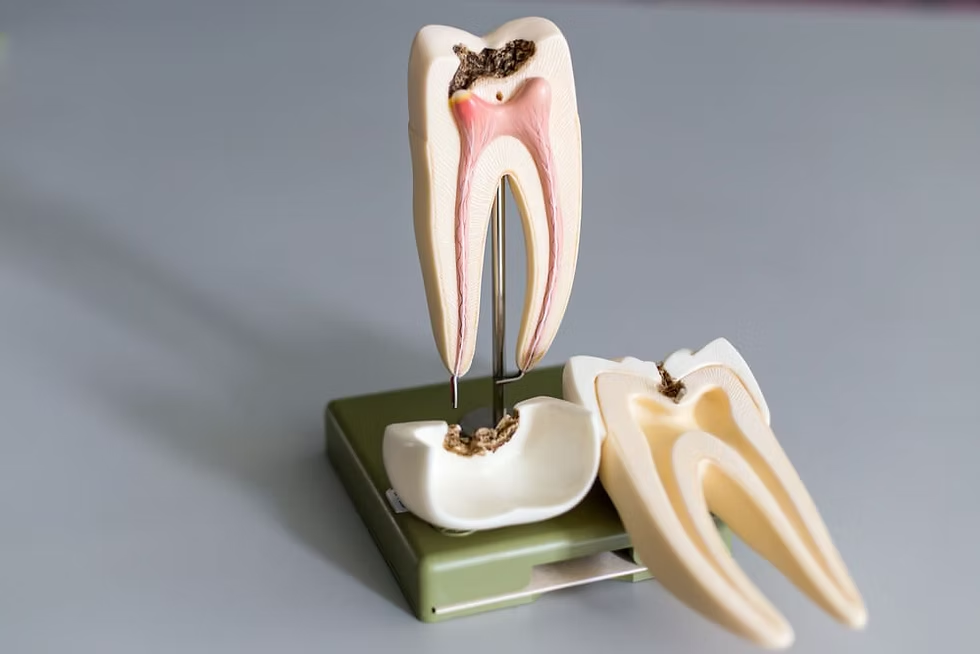

This is the question everyone actually wants answered, and the honest reply is that the reputation is badly out of date.
A root canal relieves pain rather than causing it. The severe toothache that brings people in is caused by inflamed or infected nerve tissue inside the tooth; the procedure removes that tissue, which is why most patients report significant relief immediately afterwards. Modern local anaesthetic means the treatment itself feels much like having a filling — pressure and vibration, not pain.
The fearsome reputation comes from two things. Historically, techniques and anaesthesia were less effective. And people remember the agony of the infected tooth that preceded the appointment and associate it with the treatment that actually fixed it.
What to realistically expect: the appointment itself comfortable under anaesthetic, then some tenderness for a few days as the surrounding ligament settles, manageable with over-the-counter pain relief. If you are anxious, tell us — extra numbing time, breaks, and a clear signal to stop all make a difference, and being anxious about this is entirely normal.

When a tooth is badly infected there are two real options: treat it and keep it, or remove it. The choice deserves more thought than it often gets.
Keeping your own tooth is almost always preferable. Natural teeth are better than any replacement at chewing, they preserve the bone around them, they keep neighbouring teeth from drifting, and nothing artificial matches the feel. A properly treated and restored root-canalled tooth commonly lasts decades.
Extraction makes sense when the tooth is fractured below the gumline, when so little sound structure remains that a crown cannot be retained, when the supporting bone has been lost to advanced gum disease, or when previous root canal treatment has failed and cannot be redone successfully.
Cost comparison catches people out. Extraction is cheaper on the day — but a missing tooth usually needs replacing, and an implant or bridge typically costs considerably more than root canal treatment and a crown. Choosing extraction to save money often costs more within a few years, and leaving the gap unfilled brings its own problems as teeth shift.
Root canal treatment takes one or two appointments depending on the tooth and the degree of infection.
Diagnosis. X-rays show the shape of the root canals and the extent of infection at the root tip. We test the nerve to confirm the diagnosis — not every painful tooth needs a root canal.
Anaesthetic and isolation. The tooth is thoroughly numbed, then isolated with a small rubber sheet that keeps the area clean and dry and stops anything reaching your throat. Patients often find this the most reassuring part.
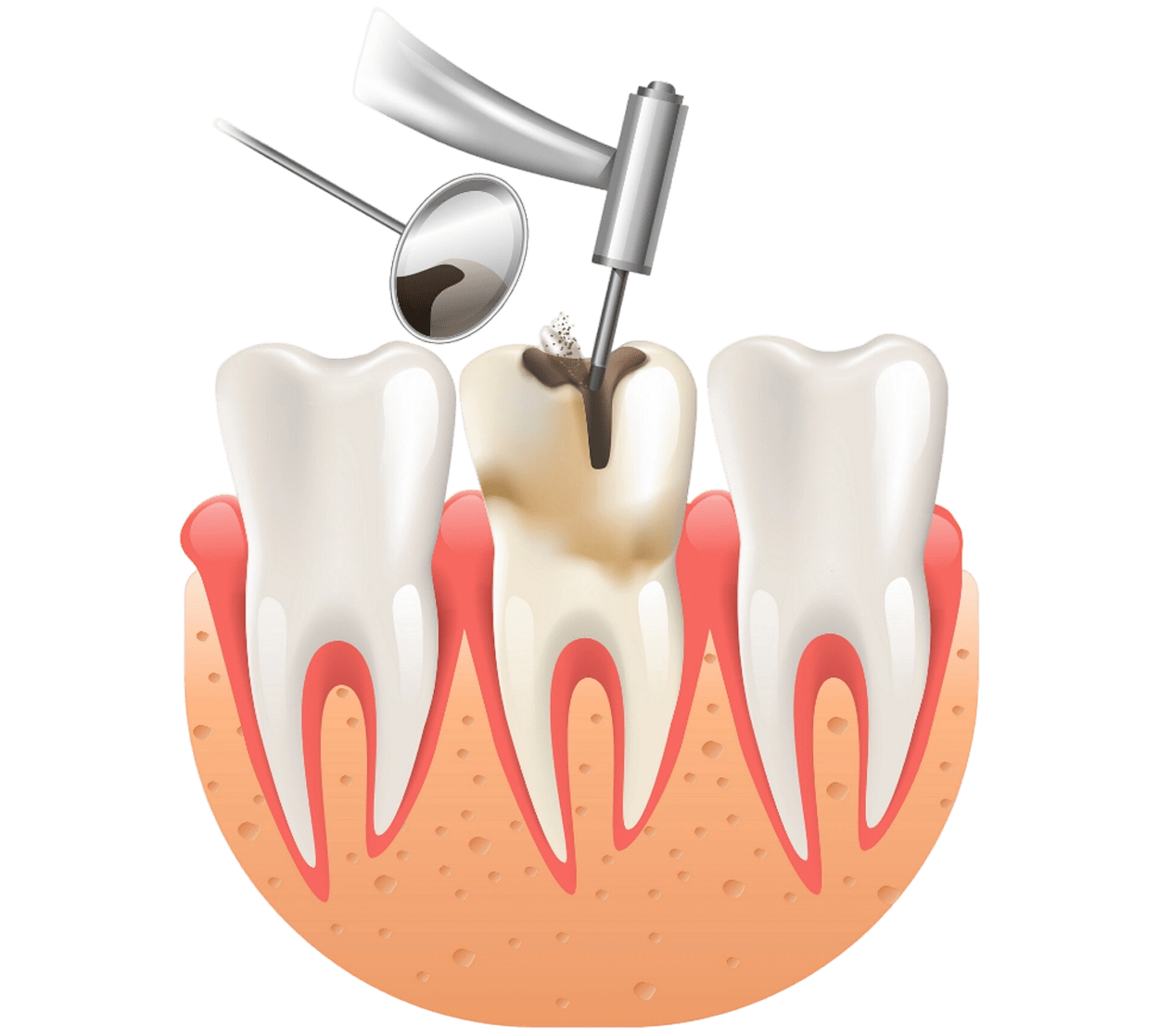
Cleaning and shaping. A small opening is made in the top of the tooth, the infected pulp is removed, and the canals are cleaned, disinfected and shaped with fine instruments. This is the bulk of the appointment.
Filling and sealing. The cleaned canals are filled with a biocompatible material and sealed so bacteria cannot re-enter. A temporary or permanent filling closes the access opening.
Where infection is significant, medication may be placed inside the tooth and a second appointment scheduled to complete the treatment.
The root canal saves the tooth. The crown is what keeps it saved, and skipping it is the most common reason treated teeth are eventually lost.
A tooth needing root canal treatment has usually already lost substantial structure to decay or fracture, and the access opening removes more. It also no longer has a blood supply, so over time it becomes more brittle than a living tooth. Back teeth in particular take heavy chewing forces, and a weakened, brittle tooth with a large filling is vulnerable to fracturing — often below the gumline, at which point it usually cannot be saved at all.
A crown covers and binds the remaining structure, distributing force over the whole tooth instead of concentrating it. The evidence on this is consistent: root-canalled back teeth restored with crowns survive substantially longer than those left with fillings alone.
Front teeth are sometimes an exception where little structure has been lost. We will tell you honestly which category your tooth falls into, and the crown should be quoted as part of the plan from the beginning rather than appearing as a surprise afterwards.
Most people return to normal activity the same day, and the recovery is more straightforward than the reputation suggests.
The first few hours. Wait until the numbness has fully worn off before eating — it is easy to bite your cheek or tongue without realising. Avoid hot drinks until sensation returns.
The first few days. Expect mild tenderness when biting, particularly on the treated tooth. This is the ligament around the root settling, not a sign of failure. Over-the-counter anti-inflammatories handle it well. Chew on the other side, especially if you have a temporary filling.
Until the crown is fitted. A temporary filling is not designed to last. Avoid hard and sticky foods on that side, and do not delay the permanent restoration — a temporary that leaks lets bacteria back in and can undo the treatment.
Call us if pain increases rather than decreases after the first few days, if swelling develops, or if the temporary filling comes out. None of these are emergencies in most cases, but all of them want checking rather than waiting.
Cost is the question most people ask before they book, and it is a fair one. There is no single price for a root canal, because the fee follows the tooth. A front tooth usually has one canal; a molar at the back can have three or four, each of which has to be cleaned, shaped and sealed. The more canals, the longer the appointment and the higher the fee.
Three other things move the number: whether the tooth has been treated before and needs retreatment, whether the canals are curved or calcified enough to need extra time, and whether the tooth needs a crown afterwards — which it usually does, and which is quoted separately.
We work from the BC Dental Association Suggested Fee Guide, which is the reference most general dentists in the province use, and we give you the full figure in writing after we have taken an X-ray and can actually see the tooth. Endodontic treatment, including root canals, is covered under the Canadian Dental Care Plan for eligible patients, and we bill most private insurers directly so you pay only the balance.
It is worth weighing against the alternative. Removing the tooth costs less on the day, but replacing it afterwards so the bite does not drift costs considerably more than saving it would have.
You will start feeling significantly better after 1-3 days of your treatment. You will experience mild sensitivity, and internal healing will take a few weeks.
Yes, you will be given local anesthesia for the treatment, but not general anesthesia to put you asleep.
You will start feeling significantly better after 1-3 days of your treatment. You will experience mild sensitivity, and internal healing will take a few weeks.
Yes, you will be given local anesthesia for the treatment, but not general anesthesia to put you asleep.
Most patients begin feeling significantly better within a few days. Mild sensitivity or soreness may continue temporarily as the tooth heals.
Yes. Local anesthesia is used to numb the tooth and surrounding area during treatment. General anesthesia is not typically required for a standard root canal.
Avoid hard, crunchy, sticky, or very acidic foods immediately after treatment, especially while the tooth is still sensitive. Follow your dentist’s specific aftercare instructions.
A crown may be recommended after root canal treatment, particularly for teeth that have lost significant structure. A crown can help strengthen and protect the treated tooth.
Yes. One of the main goals of root canal therapy is to remove infection while preserving the natural tooth, allowing you to continue chewing and functioning normally.
An untreated infection can spread beyond the tooth and may lead to an abscess, increasing pain, swelling, and damage to surrounding tissues. In some cases, the tooth may eventually need to be extracted.