Do you wake up with a sore, tired jaw? Hear a click when you chew? Get headaches that never quite have an explanation? These are classic signs of a temporomandibular joint disorder — and they are far more common and far more treatable than most people assume.
The frustrating part is how often TMJ goes unrecognised. Patients are treated for tension headaches, sinus trouble, or ear infections for months before anyone examines the jaw joint itself. At Dentist on Kingsway in Vancouver, our goal is to find the actual cause of your discomfort and get you comfortable again — usually with simple, conservative treatment.
What Is TMJ Disorder?
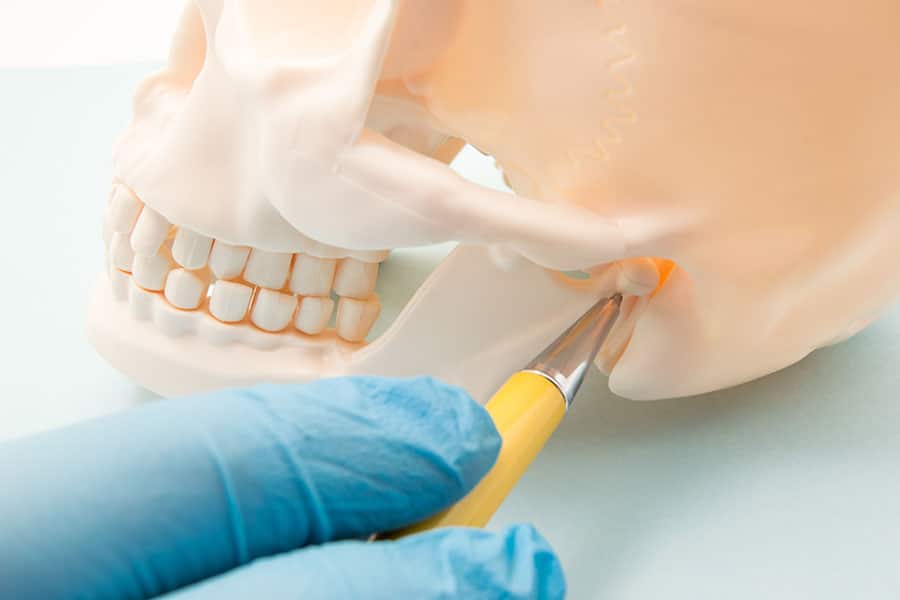
TMJ stands for the temporomandibular joint — the hinge that connects your lower jaw to your skull, sitting just in front of each ear. It is one of the busiest joints in the body: you use it every time you talk, chew, yawn, or swallow, which is several thousand times a day.
When that joint, its cushioning disc, or the muscles around it become inflamed, strained, or misaligned, the result is a temporomandibular joint disorder. You may hear it called TMD, TMJ syndrome, or TMJ dysfunction — these all describe the same family of jaw problems. Strictly speaking, TMJ is the joint and TMD is the disorder, but in everyday use the two are interchangeable.
Severity varies enormously. Some people get an occasional click and nothing more. Others develop daily pain that affects sleep, eating, and concentration. The encouraging news is that the large majority of cases improve with conservative care, and surgery is rarely needed.
Signs and Symptoms of TMJ Disorder
TMJ shows up in surprising places — which is exactly why it gets missed. Common signs include:
- Jaw pain or tenderness, especially just in front of the ears
- Clicking, popping, or grating when you open or close your mouth
- A jaw that locks or will not open fully
- Headaches, often starting at the temples and sometimes mistaken for migraines
- Ear pain, fullness, or ringing with no infection present
- Facial aching plus tension in the neck and shoulders
- Discomfort while chewing, or tiring quickly when eating
- Worn, chipped, or sensitive teeth from grinding
- A bite that suddenly feels “off”
A single symptom on its own may mean nothing. Several together — particularly jaw pain with headaches or ear discomfort — is worth having examined.
What Causes TMJ Disorder?
TMJ usually results from a combination of factors rather than one clear trigger. The most common contributors are:
- Teeth grinding and clenching (bruxism) — the leading culprit, and often something people do in their sleep without knowing it. Overnight clenching can generate far more force than normal chewing, and it happens for hours at a time.
- Stress — tension leads many people to hold their jaw clenched during the day, particularly while concentrating or driving.
- Injury or trauma — a blow to the face or jaw, or even a long dental or medical procedure with the mouth held open.
- Arthritis — inflammatory or degenerative joint disease can wear down the cartilage in the joint.
- Bite misalignment — when upper and lower teeth do not meet evenly, the muscles compensate, and that strain accumulates.
- Habits that overwork the joint — chewing gum all day, nail biting, chewing pens, or always eating on one side.
Identifying which of these apply to you is the whole point of a proper assessment, because the treatment that works depends entirely on the cause. A night guard helps a grinder enormously and does very little for someone whose problem is joint arthritis.
How TMJ Is Diagnosed
Diagnosis starts with a conversation and a careful examination. At Dentist on Kingsway, we will ask about your symptoms, when they are worst, and your habits and stress levels. Then we examine how far and how smoothly your jaw opens, listen and feel for clicking, check for tenderness in the joint and the surrounding muscles, and assess how your teeth come together.
We also look for the physical evidence patients cannot see themselves: flattened chewing surfaces, hairline cracks, and gum recession patterns that point to years of clenching. Where more detail is needed, dental imaging helps us see the joint and rule out other causes. If the picture suggests something outside the scope of dental treatment, we will tell you plainly and refer you to the right practitioner.

TMJ Treatment Options
There is no single fix for TMJ, and that is a good thing — it means there are several routes to relief. We always begin with the most conservative option that suits your case and escalate only if it is not enough.
Self-Care and Home Measures
For mild cases, straightforward changes are often all that is needed:
- Resting the jaw and choosing softer foods for a couple of weeks
- Applying ice for acute pain, or a warm compress for muscle tightness
- Gentle jaw stretches and relaxation exercises
- Reducing stress through whatever genuinely works for you — exercise, sleep, breathing techniques
- Becoming aware of daytime clenching and consciously letting the jaw hang loose
Non-Invasive Professional Treatment
When self-care is not enough, the next tier is still conservative:
- A custom night guard or bite splint — the most effective single treatment for most patients. It stops teeth grinding against each other, takes pressure off the joint, and protects your enamel. A custom appliance made from your impressions fits and performs very differently from a boil-and-bite guard from a pharmacy.
- Physical therapy and targeted jaw exercises to restore normal movement and reduce muscle guarding
- Anti-inflammatory or muscle-relaxant medication for short-term relief while other treatment takes effect
- Bite adjustment — sometimes small refinements to how your teeth meet make a marked difference
Advanced Options
For persistent cases that have not responded to conservative care, further options may be discussed:
- Botox may be considered in some cases as part of a TMJ management plan, to reduce overactivity in the jaw muscles
- Orthodontic treatment to correct an underlying bite problem — see our orthodontic options
- Restorative work such as crowns to rebuild worn teeth and restore even contact
- Referral for surgical assessment in the small number of cases where joint damage warrants it
It is worth saying clearly: most patients find lasting relief without ever needing an invasive procedure.
How to Relieve TMJ Pain at Home
During a flare-up, this is a sensible first-aid plan:
- Switch to soft foods and cut everything into small pieces for a few days
- Apply a cold or warm compress for 10 to 15 minutes at a time, several times a day
- Avoid wide yawning, gum, chewy bread, tough meat, and hard raw vegetables
- Massage the muscles just in front of and below the ear with slow, gentle pressure
- Sleep on your back rather than face-down on the painful side
- Notice and release daytime clenching — a useful cue is “teeth apart, lips together”
These measures give real but temporary relief. If pain keeps returning once you stop, the underlying cause has not been addressed, and it is time for an assessment.
A Note on Jaw Exercises
Gentle jaw exercises can help — but they should be comfortable, not forced. Opening against resistance or stretching into pain can aggravate an inflamed joint. Ask us to show you which movements suit your case before you start a routine you found online, and stop immediately if anything increases your pain.
Can TMJ Be Prevented?
Not every case is preventable, but you can meaningfully reduce your risk:
- Manage stress, since it drives most clenching and grinding
- Wear a night guard if you grind — and get it made properly
- Drop jaw-straining habits like nail biting, pen chewing, and all-day gum
- Watch your posture, particularly forward head position at a desk, which loads the jaw muscles
- Treat bite problems early rather than living with them for years
- Keep up regular checkups and cleanings so early wear from grinding is caught before it becomes painful
When to See a Dentist About TMJ in Vancouver
Occasional jaw stiffness often settles on its own. Book an assessment if you have:
- Jaw pain that is persistent or getting worse
- A jaw that locks, catches, or will not open fully
- Chronic headaches or ear pain with no other explanation
- Pain that interferes with eating, sleeping, or work
- Teeth that are visibly wearing down or becoming sensitive
Many people search for a “TMJ specialist in Vancouver” at this point. What most cases actually call for is a dentist experienced in assessing and managing jaw-joint problems — and if yours turns out to need a certified specialist or an oral surgeon, we will say so and refer you rather than keep treating it ourselves.
What Happens If TMJ Is Left Untreated?
Some cases stay mild indefinitely. Others gradually worsen, and the knock-on effects are what patients regret most: enamel worn flat by years of grinding, cracked teeth needing crowns, disrupted sleep, and chronic pain that becomes harder to unwind the longer it has been established. Early treatment is almost always simpler, cheaper, and more effective than late treatment — a night guard now versus rebuilding several teeth in five years.
If your jaw pain arrives suddenly and severely, or with significant facial swelling, do not wait for a routine appointment — see our emergency dental care page. And if the thought of dental treatment is itself part of what has kept you away, our overview of sedation dentistry explains the options for staying comfortable.
Find Relief from TMJ Pain
You do not have to live with jaw pain, clicking, or unexplained headaches. Book an assessment with Dentist on Kingsway in Vancouver, and we will work out what is driving your symptoms and build a treatment plan around it — starting with the simplest option that will work. Have a look at our full range of dental services, or get in touch to arrange a visit.
Frequently Asked Questions
1. Will TMJ go away on its own?
Mild cases often settle with rest, softer foods, and gentle jaw exercises. Symptoms that persist beyond a few weeks, or keep returning, usually need treatment to stop them getting worse.
2. Can a dentist treat TMJ disorder?
Yes. Dentists are frequently the first to identify and treat TMJ, using approaches such as a custom night guard or bite splint, bite adjustment, and orthodontic or restorative treatment where the bite is the underlying problem.
3. Does a night guard help with TMJ?
For most patients, yes — particularly if grinding or clenching is involved. A custom-made guard reduces the load on the joint and protects your teeth from wear. Custom appliances fit and work considerably better than over-the-counter versions.
4. Is TMJ disorder serious?
It is rarely dangerous, but untreated TMJ can significantly affect daily life and lead to worn or cracked teeth over time. Treated early, it usually responds well to simple measures.
5. Why does TMJ cause headaches and ear pain?
The jaw joint sits immediately in front of the ear canal, and the muscles that move the jaw run up into the temples. Tension and inflammation in that area are readily felt as ear pain, fullness, or a headache at the temples.
6. How long does TMJ treatment take to work?
Many patients notice improvement within a few weeks of starting conservative treatment such as a night guard and self-care. Longstanding cases involving significant tooth wear or a bite problem can take longer, since the underlying cause has to be addressed too.
7. Can stress alone cause TMJ pain?
Stress rarely damages the joint by itself, but it is a major driver of the clenching and grinding that do. Many patients find their symptoms track closely with stressful periods at work or home.
8. Should I stop chewing gum if I have TMJ?
Yes, at least while symptoms are active. Chewing gum keeps the jaw muscles working continuously and is one of the easiest aggravating habits to remove.
Keep Reading