
We are now accepting the Canadian Dental Care Plan — Learn More

Best Dental Practices for Senior Citizens in Vancouver

Dentist and dental assistant holding a dental X-ray and a denture model in the treatment room

Our mouths change as we get older, and so do our dental needs. Many seniors today keep their natural teeth for life, which is great news. It also means paying closer attention to gums, dry mouth, older fillings, and the way medications affect the mouth. The right dentist for seniors can make that care easier and more comfortable.

In this guide to dental care for seniors, we share the best dental practices for senior citizens in Vancouver, from daily habits at home to denture care, plus how the Canadian Dental Care Plan (CDCP) can help with costs. At Dentist on Kingsway in East Vancouver, our general family dentistry team cares for patients of every age, including older adults.

The short version: most older adults do well with a checkup and cleaning once or twice a year, a simple daily routine for teeth and dentures, an up-to-date list of medications to share with the dentist, and a quick check of whether the CDCP can help pay for care.

Common Dental Concerns for Seniors

Knowing what to watch for is the first step. These five concerns are common in older adults.

Gum Disease

Gum disease often develops slowly and without pain. Signs include bleeding when you brush, red or puffy gums, bad breath, gums pulling back from the teeth, and loose teeth.

Left untreated, gum disease can lead to tooth loss, and health conditions such as diabetes raise the risk. Regular cleanings and early treatment make a big difference. Learn more on our gum disease treatment page, or read our guide on how to manage gum disease.

Root Cavities

As gums recede with age, the roots of the teeth can become exposed. Roots lack the hard enamel that protects the crown of the tooth, so they decay more easily. Fluoride toothpaste and professional fluoride treatments can help protect them.

Dry Mouth

Hundreds of medicines can reduce saliva, including some used for high blood pressure, depression, and bladder control, according to the U.S. National Institute of Dental and Craniofacial Research (NIDCR). Saliva helps protect teeth, so a dry mouth raises the risk of cavities and fungal infections.

The NIDCR also notes that dry mouth is not a normal part of aging. If your mouth often feels dry, tell your dentist and your doctor.

Worn or Broken Teeth and Old Fillings

Years of chewing, grinding, and older dental work can lead to cracked teeth or fillings that start to leak. Regular checkups help catch these problems early, when they are simpler to fix.

Oral Cancer

The risk of oral cancer rises with age, especially for people who smoke or drink alcohol. An oral cancer screening is a quick, painless check done during your regular exam. See our oral cancer screening page to learn more.

Best Daily Dental Practices for Seniors

Good habits at home matter as much at 75 as they do at 25. The checklist below sums up the routine, and the sections that follow explain each part.
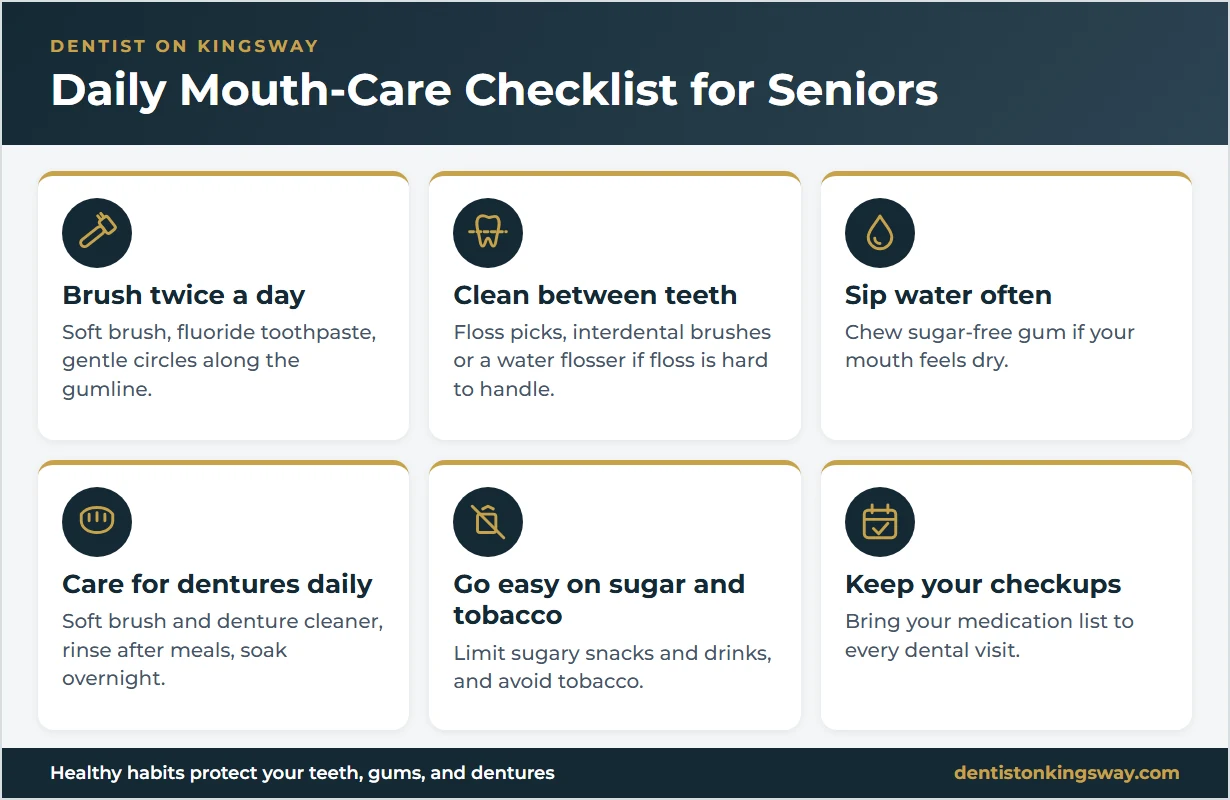
Dentist for seniors checklist: brush twice a day, clean between teeth, sip water, care for dentures, and keep checkups

Brushing and Flossing Made Easier

  • Brush twice a day with fluoride toothpaste. Use a soft-bristled brush and gentle circles along the gumline. Our brushing techniques guide shows how.
  • Try an electric toothbrush if arthritis or a weak grip makes brushing hard. The larger handle and built-in motion can help.
  • Make handles easier to hold. A foam tube or a tennis ball slipped over a manual toothbrush handle gives you a better grip.
  • Use floss picks, interdental brushes, or a water flosser if regular floss is tricky. Our flossing guide covers the options.
  • Clean your tongue to help with fresh breath.

Healthy Habits That Protect Your Smile

  • Drink plenty of water throughout the day, especially if your medications dry your mouth.
  • Chew sugar-free gum or suck on sugarless candy to help your mouth make more saliva.
  • Limit sugary snacks and drinks, including sweetened tea and coffee.
  • Avoid tobacco and limit alcohol. Both dry out the mouth.
  • Ask about fluoride. Professional fluoride treatments can help protect exposed roots.
  • Keep a list of your medications and bring it to every dental visit.

Caring for Dentures and Partial Dentures

Many seniors wear full or partial dentures. Good care keeps them comfortable and protects your gums.
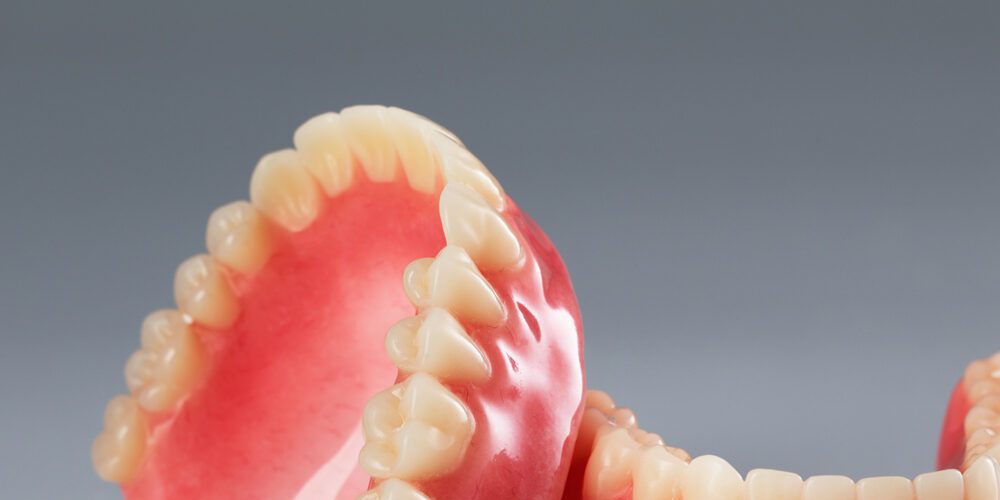
A set of complete upper and lower dentures on a grey background

Daily Denture Care

  • Clean dentures every day with a soft denture brush and a denture cleaner. Regular toothpaste is abrasive and can scratch them.
  • Rinse after meals to clear trapped food, a common cause of sore spots and bad breath.
  • Soak them overnight in water or a denture solution unless your dentist tells you otherwise. They need to stay moist to keep their shape, and it gives your gums a rest.
  • Clean over a folded towel or a basin of water so they do not break if you drop them. Avoid hot water, which can warp them.
  • Brush your gums, tongue, and any natural teeth every day.

When to Reline or Replace Dentures

Your gums and jawbone change over time, so dentures that once fit well can become loose. A well-made denture typically lasts five to ten years, and many people need a reline every two to three years to keep the fit stable. Book a visit if:

  • Your dentures slip when you talk or eat
  • You rely on adhesive when you did not before
  • New sore spots keep appearing
  • Food keeps getting trapped underneath

Please do not adjust dentures yourself. A small adjustment by your dentist usually takes minutes. Keep your annual checkup even if you have no natural teeth, because your dentist still checks the health of your gums and mouth tissues and screens for oral cancer.

Learn more on our dentures page, including implant-retained options that clip onto implants for a more secure fit.

Wearing dentures, or thinking about them?

How Often Should Seniors See the Dentist?

Many older adults do well with a comprehensive exam and cleaning once or twice a year. Your dentist may suggest more frequent visits if you have gum disease, dry mouth, or a history of cavities. Regular teeth cleanings also help keep gums healthy between exams.

What to Bring to Your Appointment

  • A current list of your medications and supplements
  • A list of your health conditions, such as diabetes or heart disease
  • Your CDCP member number or insurance details, if you have them
  • Your questions, written down so you do not forget them

What Makes a Good Dentist for Seniors?

A good dentist for seniors takes time to explain things, listens to your concerns, and understands how age and medications affect your mouth. When choosing a dentist for an older family member, or for yourself, look for:

  • Clear explanations and time for questions
  • Experience with dentures and restorative care
  • Awareness of medications and health conditions that affect dental care
  • Help with coverage, including the Canadian Dental Care Plan
  • An easy-to-reach location close to transit or parking
  • Room for a family member or caregiver to come along

Dental Coverage for Seniors in BC

Many seniors lose their dental benefits when they retire, and senior dental care costs can add up quickly. Here is what to know about paying for care in BC.

Canadian Dental Care Plan for Seniors

The Canadian Dental Care Plan (CDCP) is a federal program that helps eligible Canadians without dental insurance pay for care, and seniors were among the first groups it opened to. According to the Government of Canada, you must meet all four of these conditions:

  • You have no access to private dental insurance, including coverage through a pension, a former employer, or a plan you or a family member bought. Coverage counts as access even if you have never used it.
  • You, and your spouse or common-law partner if you have one, have filed a tax return in Canada for the previous year.
  • Your adjusted family net income is under $90,000.
  • You are a Canadian resident for tax purposes.

What you pay depends on your adjusted family net income:

Adjusted family net incomeCDCP paysYour co-payment
Under $70,000100% of the CDCP fee0%
$70,000 to $79,99960% of the CDCP fee40%
$80,000 to $89,99940% of the CDCP fee60%

The CDCP pays its own established fees, and the Government of Canada notes that these may differ from what providers charge, so you may still owe a balance.

The plan covers many common services, including exams, cleanings, fillings, extractions, and dentures. Complete dentures, relines, and repairs are covered, while partial dentures need preauthorization before treatment begins, which we submit on your behalf.

You apply through the Government of Canada, not through a dental office, and you confirm each year that you still have no access to private dental coverage.

Dentist on Kingsway accepts the CDCP and bills it directly, so you pay only what the plan does not cover. For eligibility details, co-payments, and how to apply, read our Canadian Dental Care Plan guide for BC or visit our CDCP page. If you would like help understanding your coverage, call us at (604) 558-2442.

Other Options in BC

As of this writing, BC does not run a general dental plan for all seniors. If you receive income or disability assistance, the province may help with some dental costs. See the BC government’s page on dental coverage while on income or disability assistance.

Some retirees also keep coverage through a pension plan or buy private dental insurance, though access to private coverage usually means you will not qualify for the CDCP.

Tips for Family Members and Caregivers

Caregiver holding the hand of a smiling older woman in a wheelchair

If you help care for an older parent or loved one:

  • Help with brushing and denture cleaning if hands are weak or memory is changing
  • Watch for signs of mouth pain, such as avoiding food or touching the face
  • Notice changes in how dentures fit or in how well your loved one is eating
  • Keep track of dental appointments and bring a medication list
  • Come along to appointments to help with questions and decisions

Frequently Asked Questions

Does the Canadian Dental Care Plan cover seniors?

Yes. Eligible seniors with no access to private dental insurance and an adjusted family net income under $90,000 can apply. The plan covers many common services, including exams, cleanings, fillings, extractions, and dentures, and some services need approval first.

How often should seniors go to the dentist?

Many older adults do well with a checkup and cleaning once or twice a year. People with gum disease, dry mouth, or a history of cavities may need more frequent visits.

Do I still need dental checkups if I wear full dentures?

Yes. Your dentist checks the fit of your dentures and the health of your gums and mouth tissues, and screens for oral cancer.

Is there a BC government dental plan for seniors?

BC does not run a general dental plan for all seniors. Most seniors without coverage turn to the federal Canadian Dental Care Plan, and people on income or disability assistance may qualify for some provincial dental coverage.

Is dry mouth a normal part of getting older?

No. According to the NIDCR, dry mouth is not a normal part of aging, and it is often linked to medications. Tell your dentist and your doctor, sip water often, and chew sugar-free gum to help your mouth make saliva.

How do I know if my dentures need a reline?

Book a visit if your dentures slip when you talk or eat, you need adhesive you did not need before, new sore spots keep appearing, or food keeps getting trapped underneath. Many people need a reline every two to three years.

Does the CDCP cover dentures?

Yes. The CDCP covers complete dentures, relines, and repairs for eligible patients. Partial dentures are covered too, but they need preauthorization from the plan before treatment starts.

What should I bring to a dental appointment?

Bring a current list of your medications and supplements, a list of your health conditions, your CDCP member number or insurance details, and any questions you want to ask.

On this page

Book Your Visit

Have a question about this topic? Our team is happy to help.

or call (604) 558-2442

Related guides

Scroll to Top