

A Vital Step for Healthy Teeth!
You brush your teeth every day as part of your essential oral care routine, but are you really getting a thorough clean? If you are not flossing, then you’re leaving room for dental problems. Flossing is the real magic that works against fighting gum disease and plaque.
Flossing is the key step that prevents the buildup of harmful bacteria, reduces the risk of tooth decay, and helps you maintain a fresh and bright smile. But the question still stands: how is it better than brushing? In this post, we’ll break down the importance of flossing, how to floss properly, and why it should be a daily part of your routine.
The Importance of Flossing
People assume flossing is just a regular recommendation from your dentist; however, the reality is that it is just as important as brushing. Here’s why:
- Brushing can’t reach the tight spaces within your teeth, and this is a common spot for bacteria to hide. Flossing helps prevent cavities that can arise from this issue.
- Unremovable plaque can cause gingivitis, a condition characterized by gum inflammation. If left untreated, it can turn into periodontal disease.
- Flossing also helps prevent bad breath that results from trapped food particles within the crevices of your mouth.
- Overall, flossing is beneficial for your health in general and can help prevent diseases like heart disease and diabetes.
How to Floss Properly
Flossing isn’t a lengthy or time-consuming process. Here are the simple steps that help you understand how to floss effectively:
- Choose Your Floss
There are many types of floss available, including waxed, unwaxed, and flavored options. Choose the one that feels most comfortable for you. You may also want to consider floss picks or water flossers if you find traditional string floss difficult to maneuver. - Use the Right Amount of Floss
Cut about 18 inches of floss; this is enough to work with while keeping the floss clean. Wind the ends around your middle fingers, leaving a couple of inches in between for the actual flossing. - Gently Glide Between Your Teeth
Slide the floss between your teeth gently, don’t snap it or force it, as this can harm your gums. Once the floss reaches the gumline, curve it into a “C” shape around the side of each tooth. Slide it up and down gently to remove plaque. - Don’t Forget the Back Teeth
Make sure to floss all your teeth, including the back ones. The back teeth are especially prone to plaque buildup, so it’s important not to skip them. - Dispose of the Floss Properly
Once you’re done, throw the used floss in the trash. Don’t flush it down the toilet, as it can clog plumbing.
By following these steps, you’ll ensure that you’re flossing properly and getting the most out of your oral care routine.
Flossing vs. Brushing: Which Is More Effective?
| Their Roles | Brushing | Flossing |
| What it targets | Removes plaque from the surfaces of your teeth. | Reaches tight spaces between teeth that brushing misses. |
| How it works | Cleans the outer surfaces of the teeth. | Cleans between the teeth and along the gum line. |
| Analogy | Like cleaning the front of a book. | Like dusting off the pages in between. |
| Importance | Essential for cleaning the visible parts of your teeth. | Essential for preventing plaque buildup between teeth. |
| Recommendation | Brush at least twice a day. | Floss once a day for best results. |
| Complementary Effect | Works best when paired with flossing. | Works best when paired with brushing. |
| ADA Suggestion | Brush twice a day. | Floss once a day. |
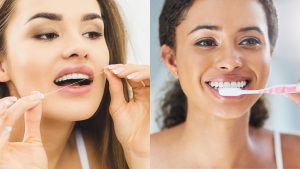
How Often to Floss: Best Time to Floss
The big question is about the frequency of flossing, and the answer is simple: once a day. Flossing once daily is sufficient to remove plaque and food particles, as long as it is done properly.
As for timing, there’s no hard and fast rule about the best time to floss. Some people prefer to floss before brushing their teeth, while others do it after. The important thing is to floss at a time that’s convenient for you. Whether it’s in the morning or before bed, make flossing a consistent part of your routine. The more consistent you are, the better your oral health will be.
The Benefits of Flossing Teeth
Flossing goes beyond just removing food particles stuck between your teeth. Regular flossing offers a number of benefits that contribute to your overall health:
- Prevents Tooth Decay
By removing plaque from between your teeth and along your gumline, flossing prevents the buildup of harmful bacteria that can lead to cavities. Regular flossing reduces the risk of tooth decay, helping you maintain a healthy, bright smile. - Improves Gum Health
Flossing helps reduce gum inflammation and bleeding, which are common signs of gum disease (gingivitis). By cleaning between your teeth, you reduce the risk of plaque turning into tartar, a hardened form of plaque that can only be removed by a dentist. - Freshens Your Breath
If you’ve ever noticed that your breath isn’t as fresh as you’d like it to be, even after brushing, chances are there’s food debris or bacteria hiding between your teeth. Flossing helps remove this buildup, leaving you with cleaner breath. - Boosts Your Overall Health
The benefits of flossing aren’t just cosmetic. Poor oral hygiene has been linked to various health conditions, including heart disease and diabetes. By flossing daily, you’re not only caring for your teeth but also supporting your overall health.
The Best Flossing Techniques
Everyone has their preferred method, but here are a few additional tips for making sure you’re flossing effectively:
- Be gentle with your gums as flossing too hard can irritate or even damage your gums. Keep the pressure light and controlled.
- Floss between all teeth since it’s easy to miss the back teeth, but they are just as important. Make sure to floss everywhere, not just the front ones.
- Use the right tools: Whether it’s traditional floss, floss picks, or a water flosser, pick the tool that you’re most comfortable with. Just make sure you’re flossing regularly.

Floss for Better Dental Health
Flossing is a crucial part of your daily routine, but it can often be overlooked. It also takes time and practice to do it properly. While brushing cleans the surface of your teeth, flossing targets those hard-to-reach spaces between your teeth where plaque and bacteria can hide. When done together, they provide the best defense against cavities, gum disease, and bad breath.
So, if you haven’t already, start making flossing a daily habit! Incorporate it into your routine today and experience the benefits of cleaner, healthier teeth and gums. Don’t wait for dental problems to arise and get ready to take control of your dental health! Start flossing today!
Frequently Asked Questions (FAQs)
1. Is it good to floss every day?
Yes, flossing is good for your oral health as it protects your teeth from dental issues like cavities and gum disease.
2. What is the best time to floss?
It is best to floss before brushing as it is more effective this way.
3. Can you floss with toothpaste?
Yes, it is indeed a nice technique to floss with toothpaste as it targets micro cavities and issues.
4. Is there any homemade dental floss?
Yes, silk thread at home makes for a great option as a dental floss.