A root canal in British Columbia typically costs $700 to $1,500 CAD, and which tooth is involved does most of the work in that range. A front tooth has one canal and usually lands at the low end; a molar can have three or four and sits at the top. The 2026 BCDA Suggested Fee Guide lists a three-canal molar root canal at $1,196. The crown that usually follows is billed separately and adds roughly $900 to $1,300.
Those are the honest numbers up front. The rest of this guide explains what changes the price, why Metro Vancouver quotes often run above the guide, what the Canadian Dental Care Plan actually covers — and it does cover root canals — and how a root canal compares on cost with simply removing the tooth.
How Much Does a Root Canal Cost in BC?
Root canal fees are quoted per tooth, and the number of canals inside that tooth is the main driver. More canals means more time, more instruments and more precision.
| Tooth | Canals | Typical BC cost (CAD) |
|---|---|---|
| Front tooth (incisor or canine) | Usually 1 | $500 – $800 |
| Premolar | 1 – 2 | $700 – $1,000 |
| Molar | 3 – 4 | $800 – $1,500 |
| Retreatment of a previous root canal | Varies | Higher than the original, often well above $1,200 |
For reference, the BCDA’s 2026 guide lists code 33131 — a molar root canal with three canals — at $1,196.00. That is a suggested fee, not a fixed price, and it is the reference point most BC quotes are built around rather than a number you will necessarily be charged.
The Crown Afterwards Is Part of the Real Cost
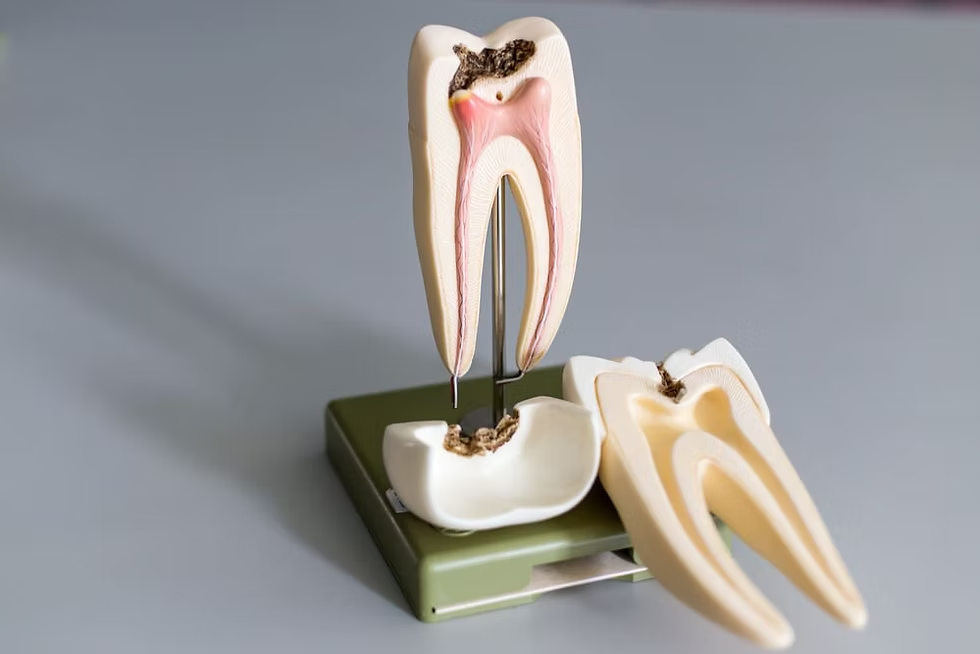
This is the single most common surprise on a root canal estimate. The root canal fee covers cleaning and sealing the inside of the tooth. It does not include rebuilding the outside.
A tooth that has had a root canal has lost its blood supply and a good deal of structure, which makes it more brittle. Back teeth in particular usually need a crown afterwards to stop them fracturing under chewing force. Budget roughly $900 to $1,300 for that, sometimes with a post and core build-up on top. Our post on the benefits of dental crowns explains when one is genuinely needed.
So the realistic all-in figure for a molar is often $1,700 to $2,800 once the crown is included — which is why comparing a bare root canal quote against a competitor’s all-in quote is misleading. Ask which one you are being given.
What Changes the Price
- Which tooth. Canals are the cost. A single-canal incisor and a four-canal molar are different procedures.
- Whether it is a retreatment. Reopening a previously treated tooth, removing old filling material and re-cleaning takes considerably longer.
- Who does it. A general dentist handles most cases. Complex or re-treatment cases are often referred to an endodontist, a dentist with additional specialist training in root canals, and specialist fees are typically higher.
- Whether there is an active infection. An abscess may need draining, and antibiotics or an extra visit add to the total.
- Sedation. Most root canals are done with local freezing alone, but sedation is available and is billed separately.
- Imaging. X-rays are part of diagnosis; a 3D scan is sometimes needed for unusual canal anatomy.
The BCDA Fee Guide, and Why Vancouver Quotes Often Run Higher
Every year the British Columbia Dental Association publishes a suggested fee guide. As the BCDA puts it on its own cost of dentistry page, it “produces an annual suggested fee guide for dentists in BC” — and on whether dentists must follow it, the answer is stated plainly: “No. While many dentists will follow a number of fees within the guide, there is no requirement to do so.” The same page notes that “cost of dental treatment varies by dental practice, location and the individual needs of the patient.”
Location is the part that matters in this city. Commercial rent and staffing costs in Metro Vancouver are among the highest in the country, and practices price accordingly — it is common to see quotes sitting somewhat above the guide, particularly downtown. A neighbourhood practice on Kingsway generally sits closer to it.
The BCDA’s own advice is worth following: request a written estimate for complex procedures, and discuss all of your options and their costs before treatment starts.
Does Insurance or the CDCP Cover a Root Canal?
Better news here than with most major dental work.
- The Canadian Dental Care Plan covers root canals. Endodontic treatment — root canals, pulpectomies and treatment to reduce infection — is on the CDCP’s list of covered oral health care services, and so are crowns with preauthorization. How much you pay depends on your adjusted family net income: the plan covers 100% of eligible costs under $70,000, 60% from $70,000 to $79,999, and 40% from $80,000 to $89,999. Our Canadian Dental Care Plan page explains how it works at our office.
- Private insurance. Root canals are usually covered as a basic or major service, commonly at 50–80% depending on the plan. Watch your annual maximum, because the crown afterwards often pushes the combined total past it. Ask your insurer for a written pre-determination.
- Timing matters. If your root canal falls late in a benefit year, splitting the treatment and the crown across two years can keep both within their annual maximums. Ask us — it is a common and entirely legitimate piece of planning.
Root Canal or Extraction? The Comparison People Actually Weigh
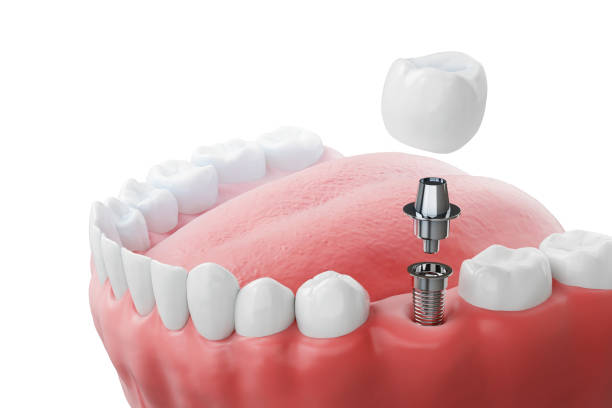
When the quote lands, the question that follows is usually “could I just have it pulled?” You can — but the comparison is not as favourable as it first looks, because a gap rarely stays a gap.
| Option | Typical BC cost (CAD) | What follows |
|---|---|---|
| Root canal + crown | $1,700 – $2,800 | You keep your own tooth and root |
| Extraction alone | $200 – $600 | A gap, with neighbouring teeth free to drift and bone to shrink |
| Extraction + bridge | $2,700 – $5,100 | Two healthy teeth filed down to carry it |
| Extraction + partial denture | $700 – $2,100 | Removable; needs relining as the jaw changes |
Saving the tooth is almost always the cheaper long-term answer, and no replacement performs quite like a natural root. Extraction is the right call when a tooth is cracked below the gum or too badly decayed to restore — our tooth extractions page covers when that applies.
What Actually Happens During a Root Canal
The reputation is worse than the reality. With modern freezing, most patients report it feels much like having a filling — the relief from the pain that brought them in is usually the memorable part.
Your dentist numbs the tooth, makes a small opening, removes the infected pulp, cleans and shapes the canals, then seals them. A temporary filling protects the tooth until the permanent restoration is placed. Most cases are done in one or two visits. Our root canal treatment page walks through it step by step, and our post on the truth about root canals tackles the myths directly.
The infection that leads here usually starts as ordinary decay, so the cheapest root canal is the one you never need — see our tooth decay treatment and gum disease treatment pages.
Root Canal Costs in Vancouver and on Kingsway
Vancouver sits at the higher end of BC’s range because clinic overhead in the city is higher, but the range is wide and where a practice sits inside it has more to do with the tooth than the postcode. A single-canal front tooth is priced very differently from a four-canal molar with an abscess.
Dentist On Kingsway serves patients across East Vancouver and the neighbourhoods along Kingsway. If severe toothache is what brought you here, treat it as urgent — our emergency dentist page explains how same-day care works. And if you are holding a quote from another clinic and simply want to understand what is in it, bring it in.
Frequently Asked Questions
How much does a root canal cost in BC?
Typically $700 to $1,500 CAD per tooth. A front tooth with one canal usually runs $500 to $800, a premolar $700 to $1,000, and a molar $800 to $1,500. The 2026 BCDA Suggested Fee Guide lists a three-canal molar root canal at $1,196. The crown that usually follows is billed separately.
Does the root canal price include the crown?
Almost never. The root canal fee covers cleaning and sealing the inside of the tooth. A crown to protect it afterwards adds roughly $900 to $1,300, so an all-in molar figure is often $1,700 to $2,800. Always ask which of the two a quote covers before comparing it with another.
Does the Canadian Dental Care Plan cover root canals?
Yes. Endodontic services, including root canals, are on the CDCP’s list of covered services, and crowns are covered with preauthorization. Your share depends on adjusted family net income — the plan covers 100% under $70,000, 60% from $70,000 to $79,999 and 40% from $80,000 to $89,999.
Why is a molar root canal more expensive than a front tooth?
Canals. A front tooth usually has one; a molar can have three or four, often curved, and each has to be cleaned, shaped and sealed individually. That is more chair time and more precision, so the fee is higher.
Is it cheaper to pull the tooth instead?
Only on the day. An extraction runs about $200 to $600, but the gap rarely stays a gap — replacing the tooth with a bridge runs $2,700 to $5,100 all in and a partial denture $700 to $2,100, against $1,700 to $2,800 to save your own tooth with a root canal and crown.
Does a root canal hurt?
Not the way its reputation suggests. The tooth is fully frozen, and most patients say it feels similar to having a filling. The pain people remember is usually the infection beforehand, which the treatment relieves.
Book a Root Canal Consultation on Kingsway
If a tooth is aching, sensitive to heat, or you have been told you need a root canal and want the cost explained plainly, our team is happy to help. We will examine the tooth, take the X-rays needed to see what is going on, and give you a written, itemised estimate — including the crown, if one is needed — before anything is booked.
Call us at (604) 558-2442 or request an appointment online. We are at 2249 Kingsway, Vancouver, open until 7 p.m. on Thursdays and on Saturdays until 4 p.m.
Cost ranges in this guide reflect the British Columbia dental market as of September 2026 and are provided for general information. They are not a quote and they are not our fee schedule. Fee guide information is drawn from the British Columbia Dental Association; coverage details from the Canadian Dental Care Plan.
Keep Reading